
Intrepid explorers are we, occasionally aiming for the path less followed. In this spirit, a small gaggle of Marshians assembled on a Saturday morning in October to explore some less frequented areas of the Marsh, and to explore how wet the Marsh has become because of Marshian dam-building.
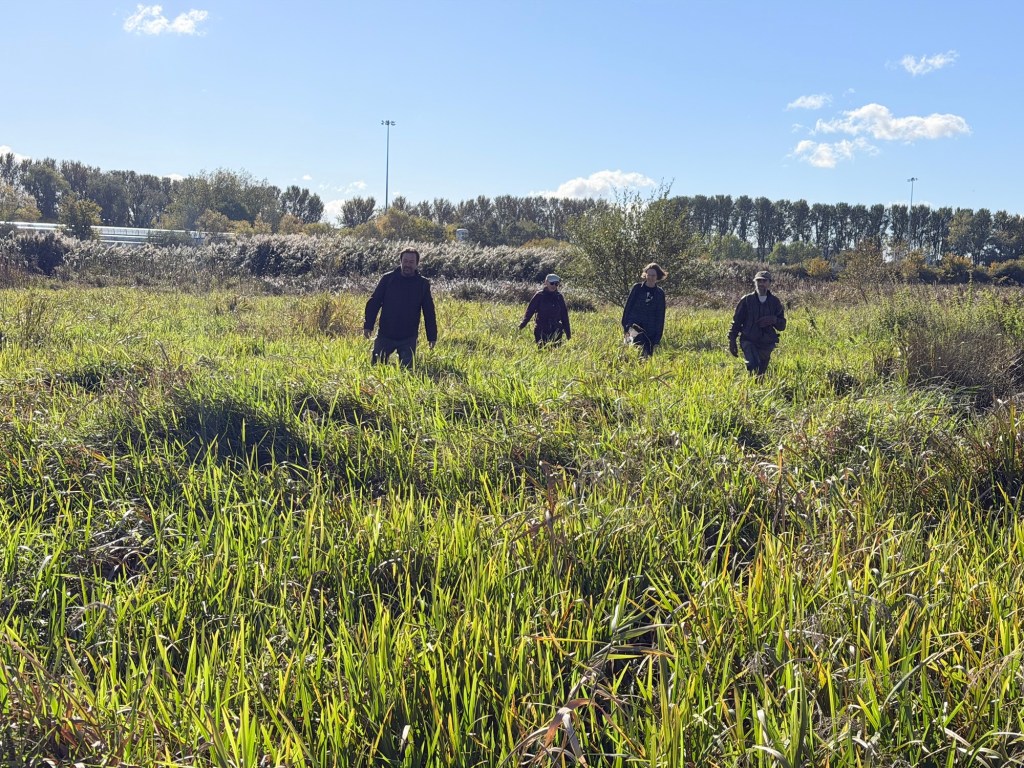
At Footpath 6, just by A Swan Dam and a smidge south of the boardwalk, we took a sharp eastward turn. This brought us into Little Fobney Meadow, where we saw a pair of reed buntings enjoying the autumn sun. The area we were in also contained a type of grass which resembled exploding white stars atop stalks; the lovely aftermath of the seeds departing.
We kept moving further east along the line of trees following the Fobney brook. There, we could see evidence of the ravages of ash dieback, although a couple of the ash trees still looked green and healthy, which gave grounds for hope.
The possibility of replacing the perished ash trees with apple trees was discussed, which would further increase the variety of fruits to be foraged on the marsh in summer.
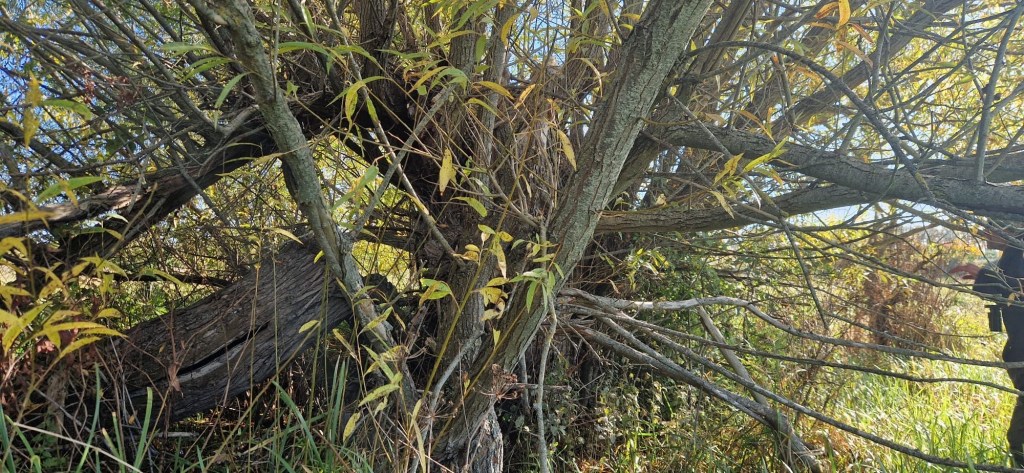
Beside a ditch running from south to north and bisecting Little Fobney Meadow, we stopped beside an expanding willow tree. As it has cracked and splayed over time, it has naturally spread new growth along the course of the ditch, so it now covers a stretch of land about fifty yards in length. Not only that, we could see where the original trunk had been hollowed out and the marks within it made by beetles and woodpeckers. This trunk is miraculously supporting fresh leafy growth. The life of a willow and the life it supports seem infinite.
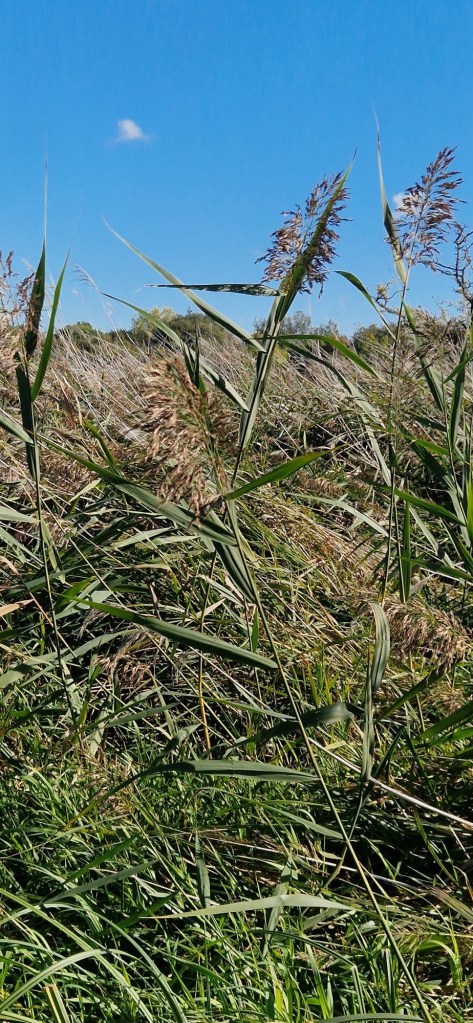
Moving on and continuing our easterly course, we came to the north side of what is affectionately dubbed ‘the lake’. Owing to the towering fortress of the reed bed, we were unable to see the northern edge of the water. With the cattle gone, a quiet relief sweeps through the marsh; the reedbed sighs, finally free to reclaim the land.
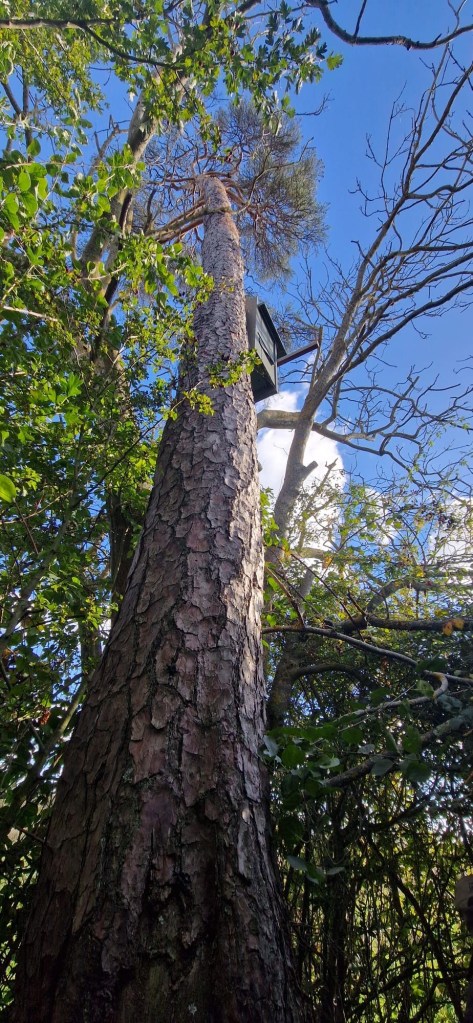
Just to our north, we could see an owl box which had been installed by Marshians in January. Unfortunately, there were no signs of an owl in it, but that can still change.
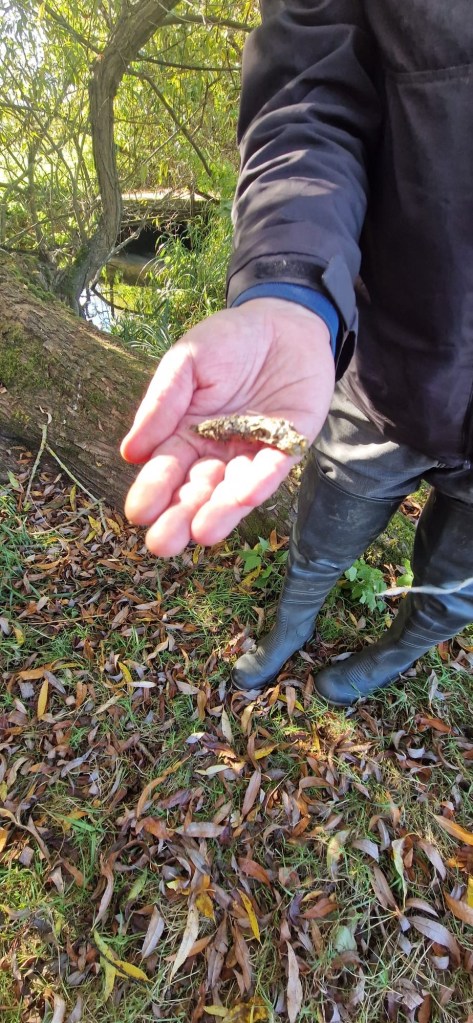
We got to the northern bank of the watercourse at the northern side of Little Fobney Meadow and found relatively fresh badger and otter droppings. Amongst the otter spraints could be seen the remains of fish scales. The watercourse appears to be rich in aquatic life.
Making our way toward Prosecco Point, we observed a landscape in transition. The sudden, deep squelch of dark, sodden mud under our feet brought a rush of excitement. Otterdam is working! Against the odds of a dry summer, the wetland remains resiliently wet; sequestering carbon and standing ready to absorb winter floods.
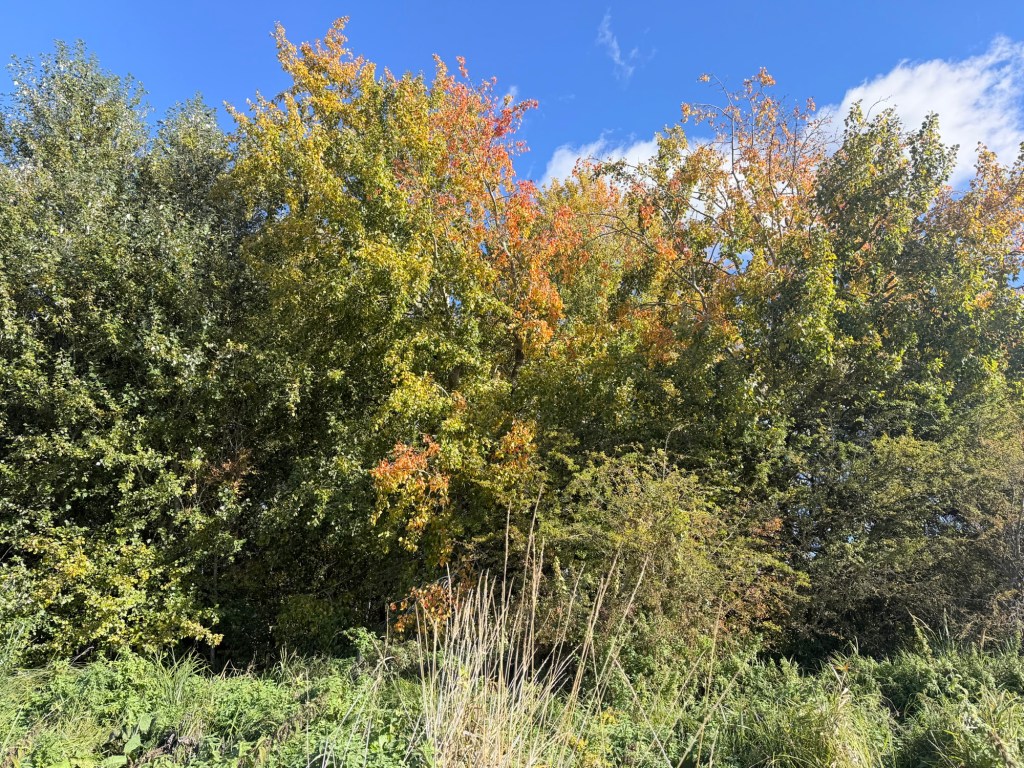
We headed back west across the northern section of the Marsh. The October sunlight on the treetops was always impressive, and at one point we saw a pair of roe deer prancing away from the line we were walking along.
Our journey ended with a cup of tea in the shade of an oak tree, having experienced the Marsh from a range of new perspectives.

