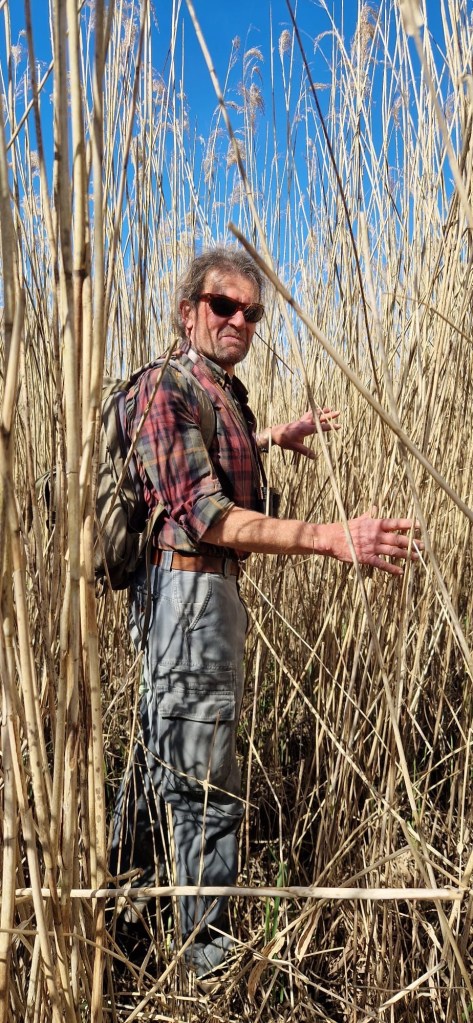
The recent hot dry weather has caused a catastrophic failure among the breeding Reed Warblers.
Having flown all the way from Africa to raise their young in the huge Reed bed in the western end of the marshes they had to go back early. The Reed bed dried up. The reeds were swamped with bindweed and the very special technique Reed warblers use didn’t work this year.
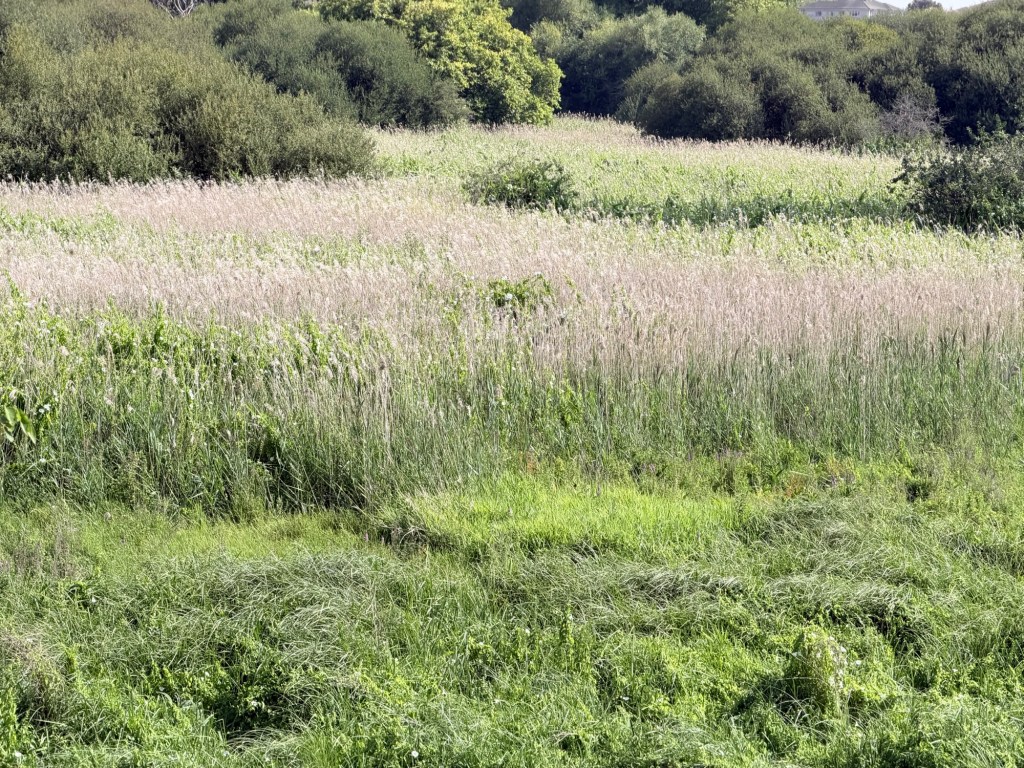
They build their tiny nest attached to the stem of the reed. But if the reed gets pulled down by the weight of bindweed they can’t do that. And by the time they realised what was happening it was too late.
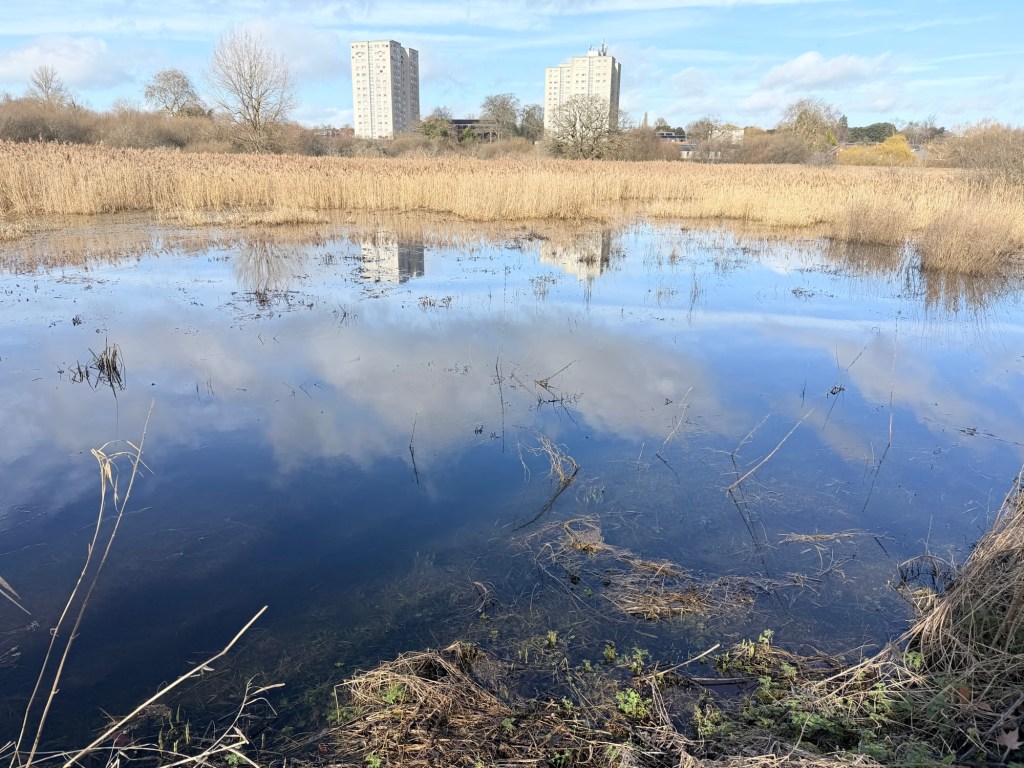
Back in February the field was full of water. We’d had high water levels since late December. We’d hope that a fair bit of that water would linger through the summer.
The field drains through a deep culvert flowing UNDERNEATH the Holy brook. Its only purpose is to get water out of the field as fast as possible. That was important 60 years ago when this field was grazed and there was a thriving dairy farm.
The farm has long gone. It’s now a housing estate. The winter grazing now has three tower blocks on it, the summer grazing has all but vanished and this field hasn’t had a cow in it for over 50 years.
The reeds spread slowly at first. There was a small patch and a handful of Reed warblers in the 1990s.
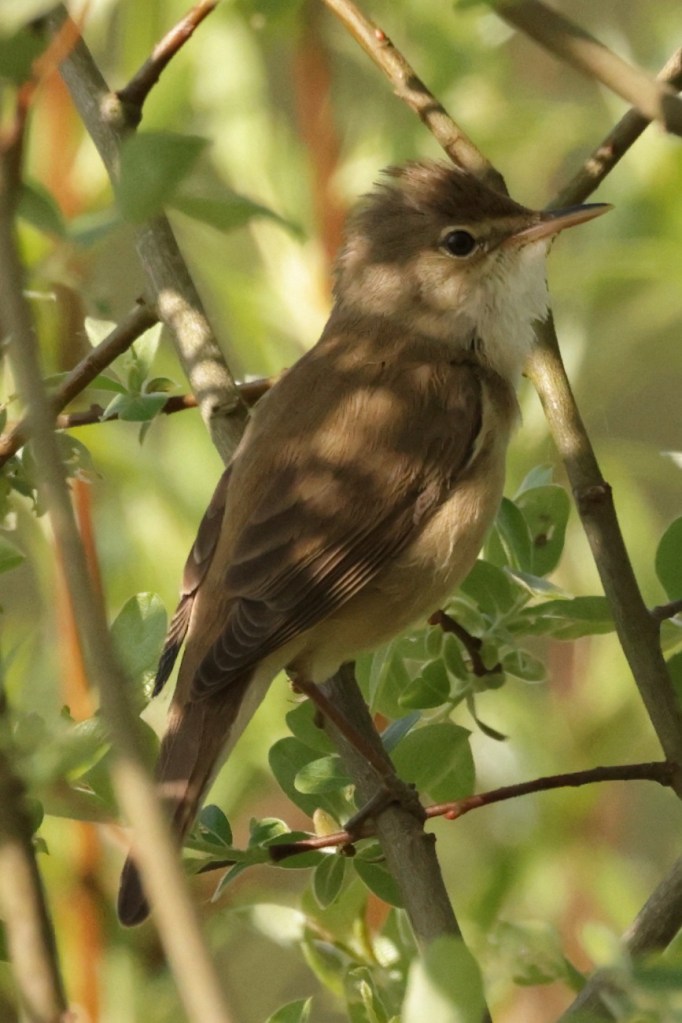
As the drainage became less effective the reed bed grew. So did the Reed warbler population. And quite a lot more besides. There’s a ton of life in a wet Reed bed.
It was easy to slow down the drainage. The nearby railway embankment was covered with ballast. Over a few years that ballast, small fist sized chunks of granite, found its way into empty sandbags which found their way into the ditch that drained the field.
As more water remained in dry spells the reeds spread. They have almost covered the whole field. But this year the field has suddenly dried out. The pressure of water displaced the stones and leaked away.
A lot of the water comes from the Holy brook which is much higher than the field. Much lower downstream a neglected weir has collapsed and allowed the water to flow away. Whilst the council and the environment agency argue about whose job it is to fix it the brook itself has become sickly channel. Dirty brown water full of nutrients and algae, almost totally devoid of fish, crawling with crayfish and with the banks slowly being rescued by Marshians from being smothered in Himalayan balsam.
More importantly the level is really low. so a combination of the water draining away and no water coming in has allowed bindweed to spread. It’s everywhere. It has its place but a whole area with nothing but bindweed isn’t anywhere near as valuable as a reed bed.
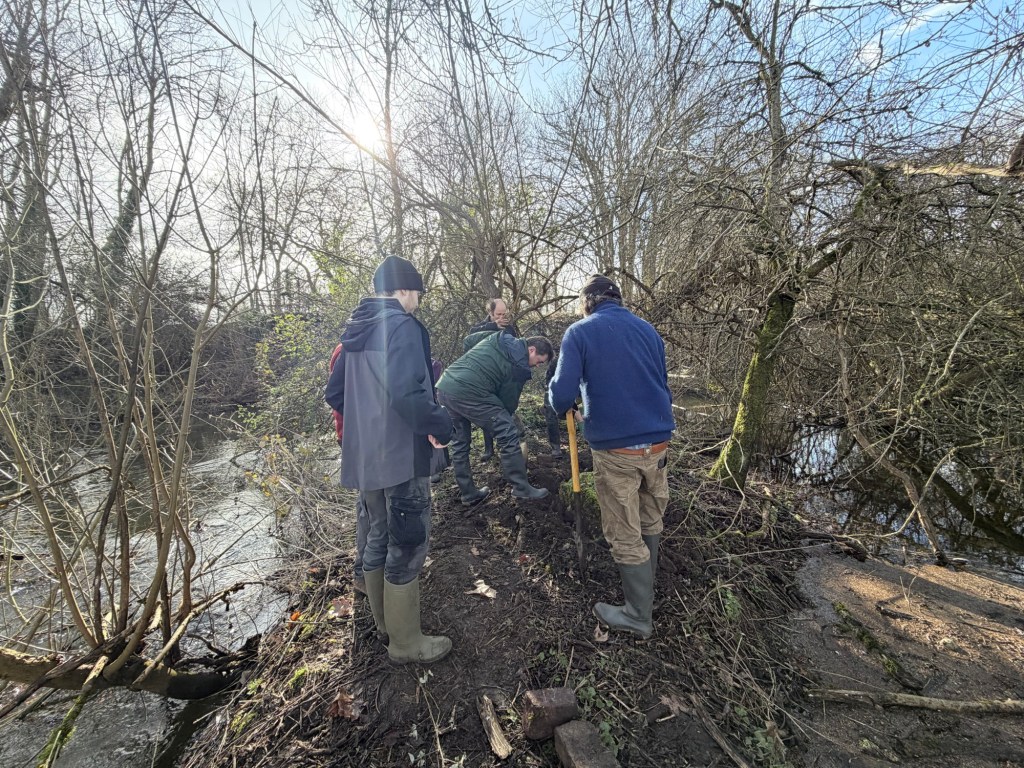
Back in the winter we tried to block it more effectively by throwing more bags of rocks and soil into the ditch but it was hit and miss. And we mostly missed.
Now the water has almost all gone. It’s very sad.
But it has given us an opportunity. The unusually low levels and the completely dry drainage channel has allowed rare access to the pipes that flow beneath the brook.
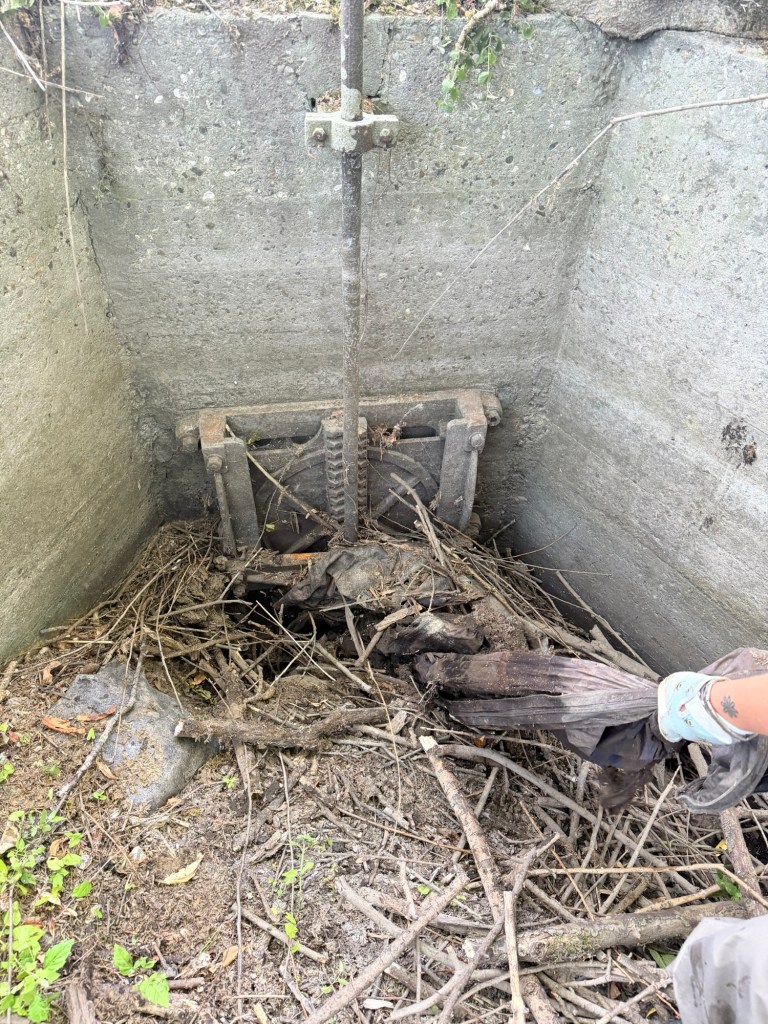
So we cleared it all out to see what we could do with it.
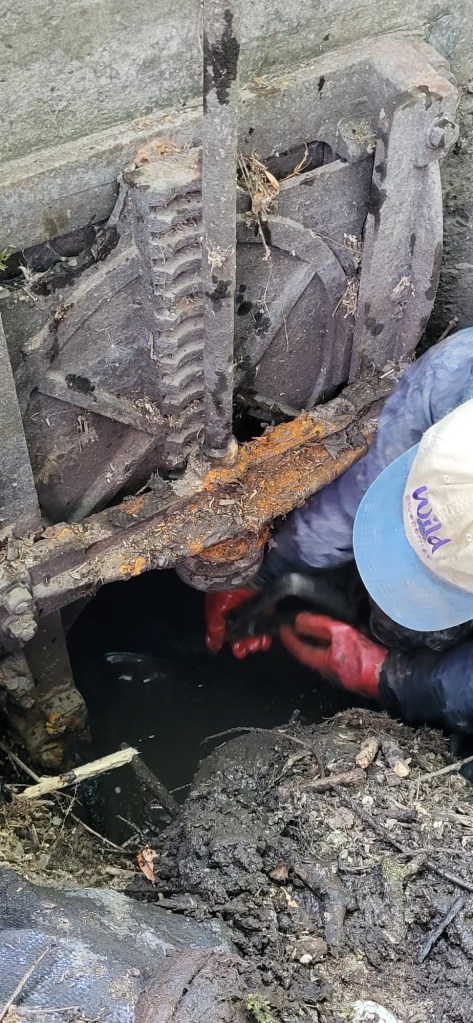
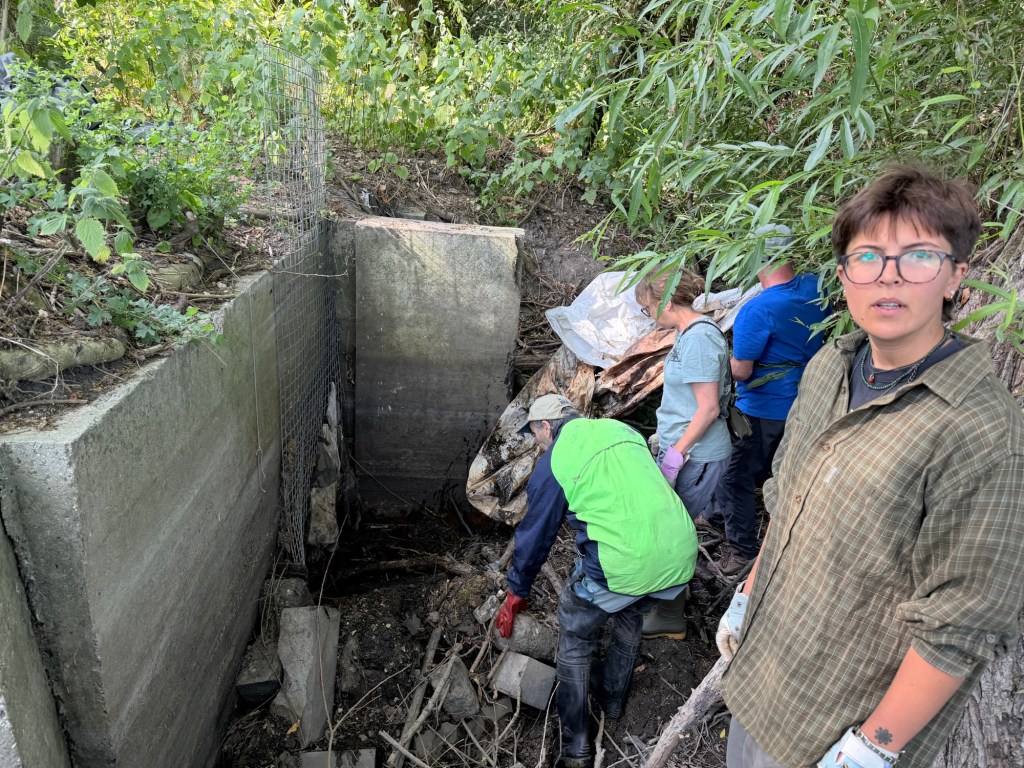
There are two pipes really really deep below the river. We didn’t realise until now just how deep. Or how they were designed to function. They were designed to be closed but one is jammed wide open and the other has only the relic of the gate that used to close it.
So the team of beavers set to work.
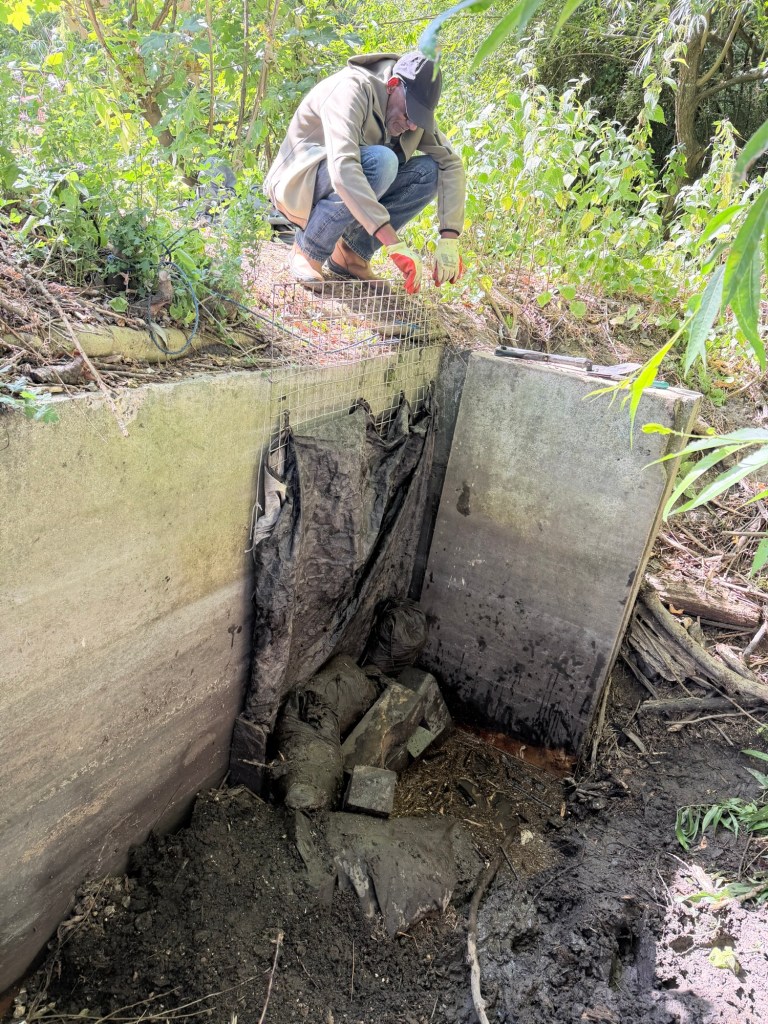
The pipe that has no control on it at all now has what looks to us like a really effective barrier. Improvised, just by using beaver ingenuity and a desire to see the Reed warblers come back next year and breed
The other one needs to function.
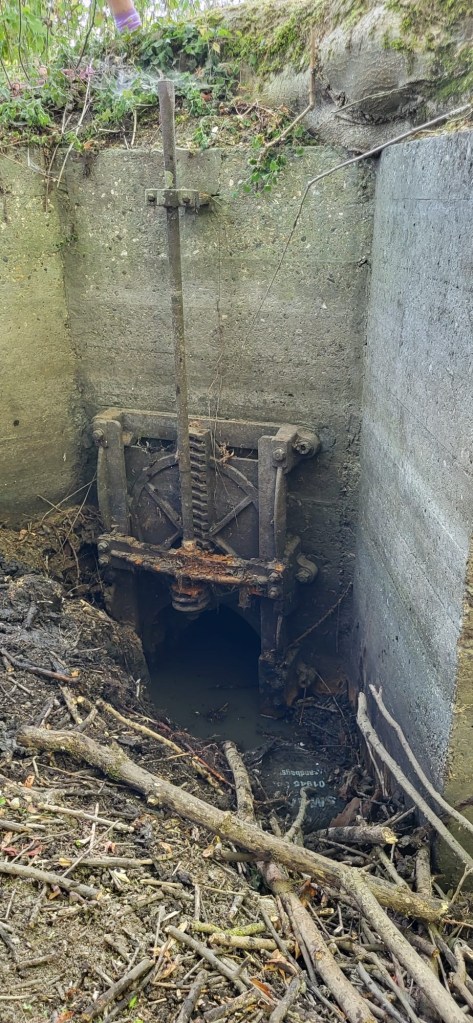
And next week we hope to go back and get it working.
And if we succeed there are many things beside Reed warblers that will enjoy a thriving Reed bed.