
We’ve waited a long time to pollard this willow.
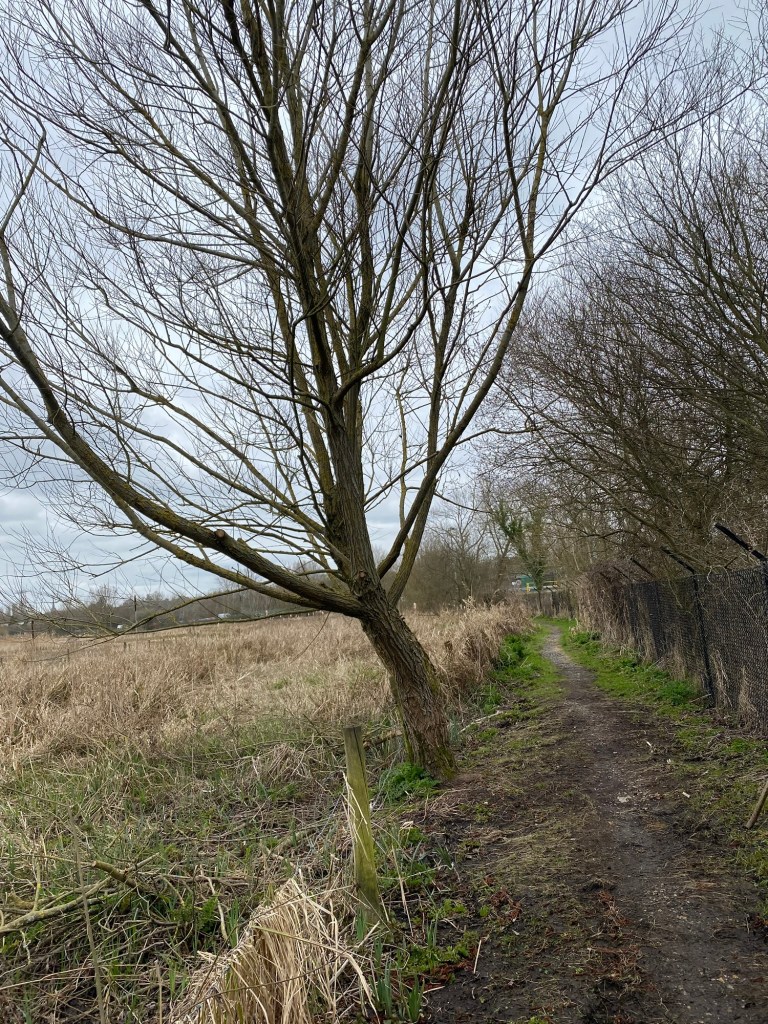
Only time will tell if it was worth the wait.
It’s a crack willow. And sooner or later it will crack. That’s what they do. And it’s very clever.
As the willow grows old it quite literally falls apart. As the branches crack and fall they root and regrow. An old willow can produce a huge ring of trees around the old trunk, which might eventually vanish. All you’re left with is a grove of newish trees. The young trees grow old too, and fall and root, and a huge ring of trees will grow around the outside. There’s lots of them in the marsh, including some really impressive trees.
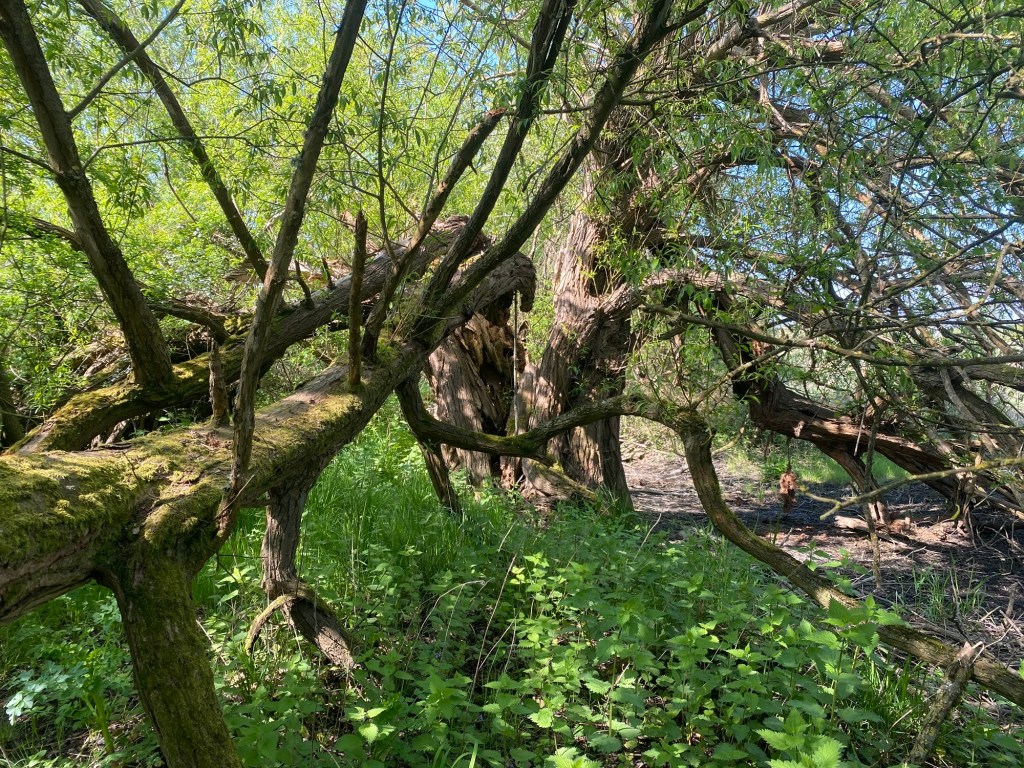
Willows have a really important part in the ecosystem here. So many small creatures live in the rotting wood, feed on the leaves, or sip nectar from the flowers.
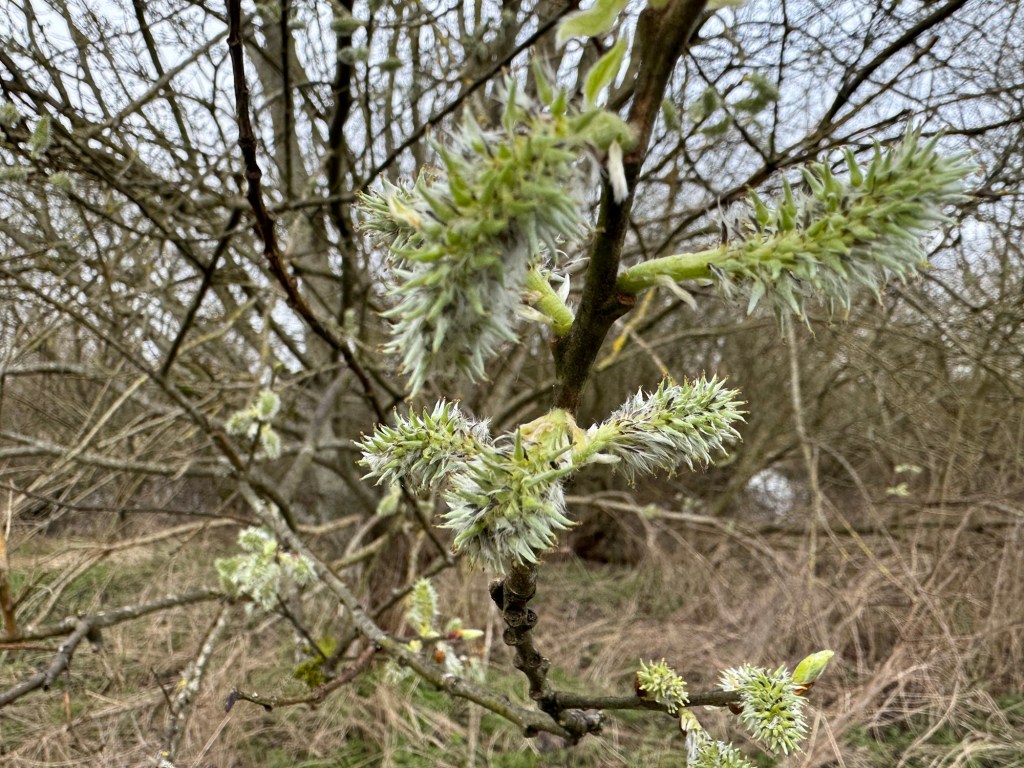
Right now the earliest willows to flower are the Sallows, Pussy willows.
On some the leaves are beginning to emerge. Ideally any work on the trees would be done while the tree is dormant. And we have had plans for a while to do quite a lot of work to one tree in particular
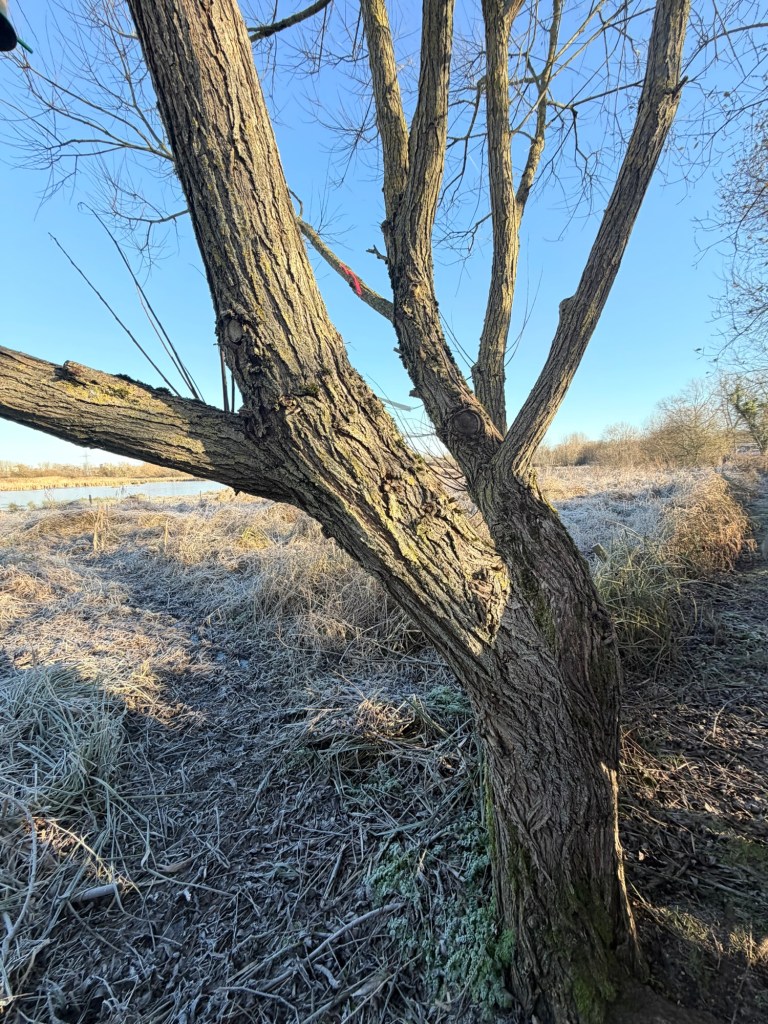
There are so many reasons to pollard this tree.
One is that nearby grew an incredible tree, ancient and enormous. An old pollard that had been cut many times in the past. I was shown it by a guy called Terry who looked after the ditches that criss cross the marsh. He covered a huge area in his work but this tree was special. Sadly it caught fire and eventually died completely. Bits of it live on in trees planted nearby from twigs and branches of that old pollard.
It is possible that the tree we’ve just pollarded was a twig from that tree. Lots were planted but lots fell victim to hungry cattle. It would now be about 25 or 30 years old.
Another reason to pollard a willow if for the regrowth.
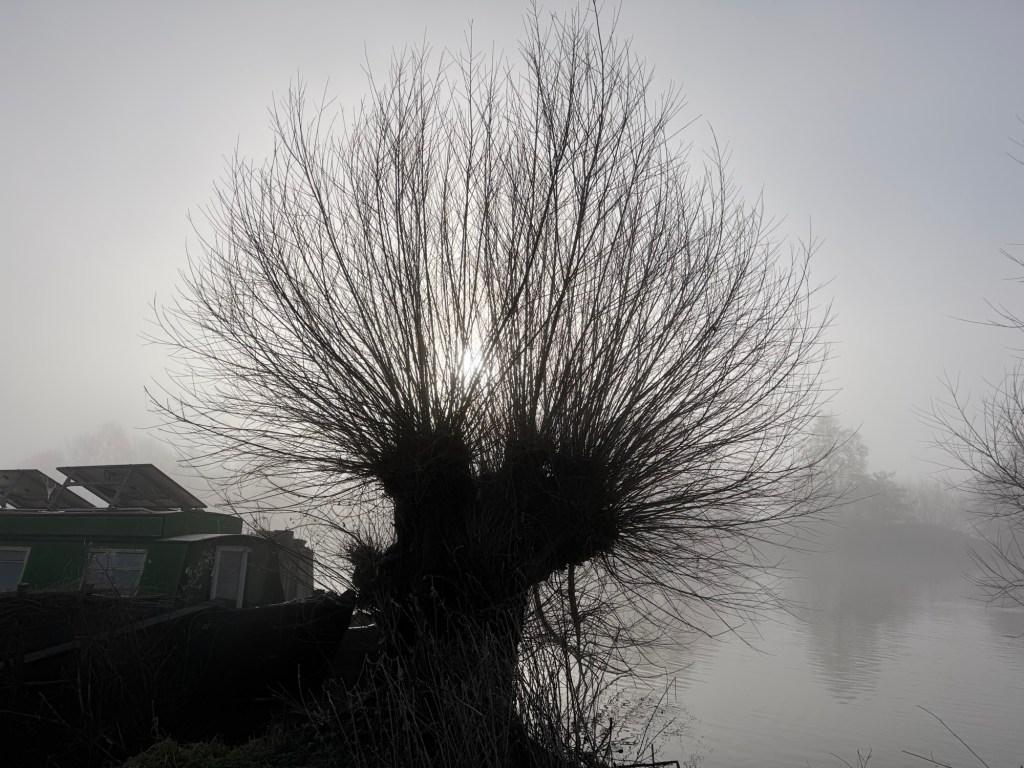
Basket weaving, fencing, artists charcoal and willow sculptures. And much more besides. One need we have is for lots of twigs to grow into new willows elsewhere in the marsh. Once cut willows send out lots of new shoots.
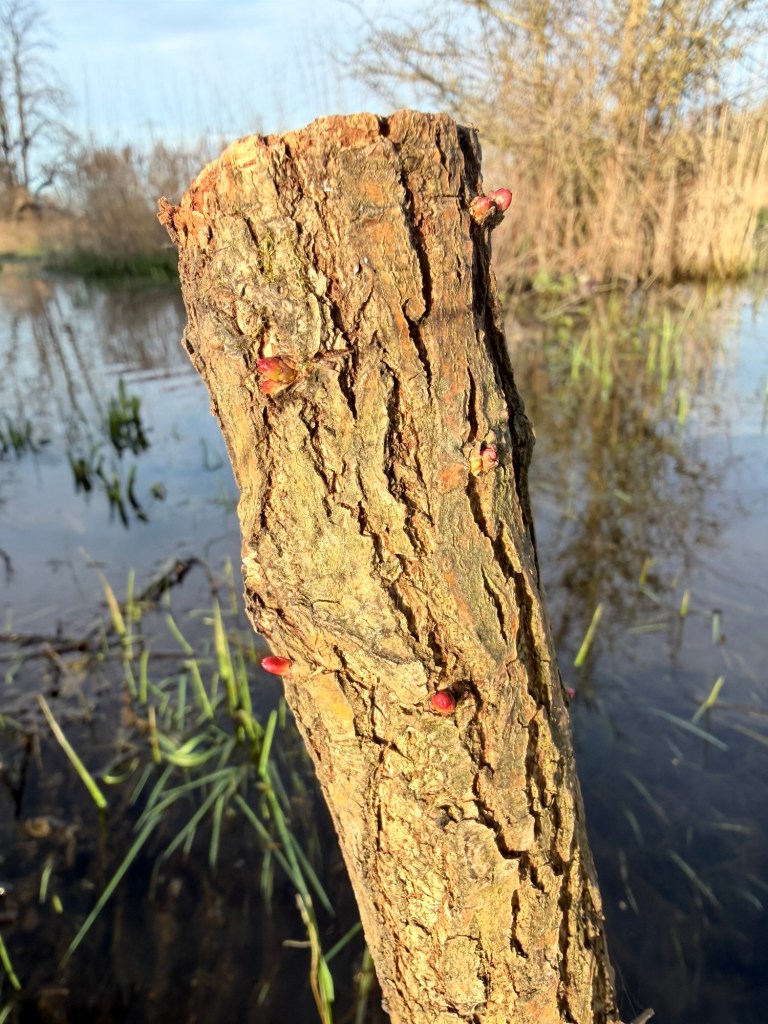
One branch we cut a couple of weeks ago and then planted is already sprouting.
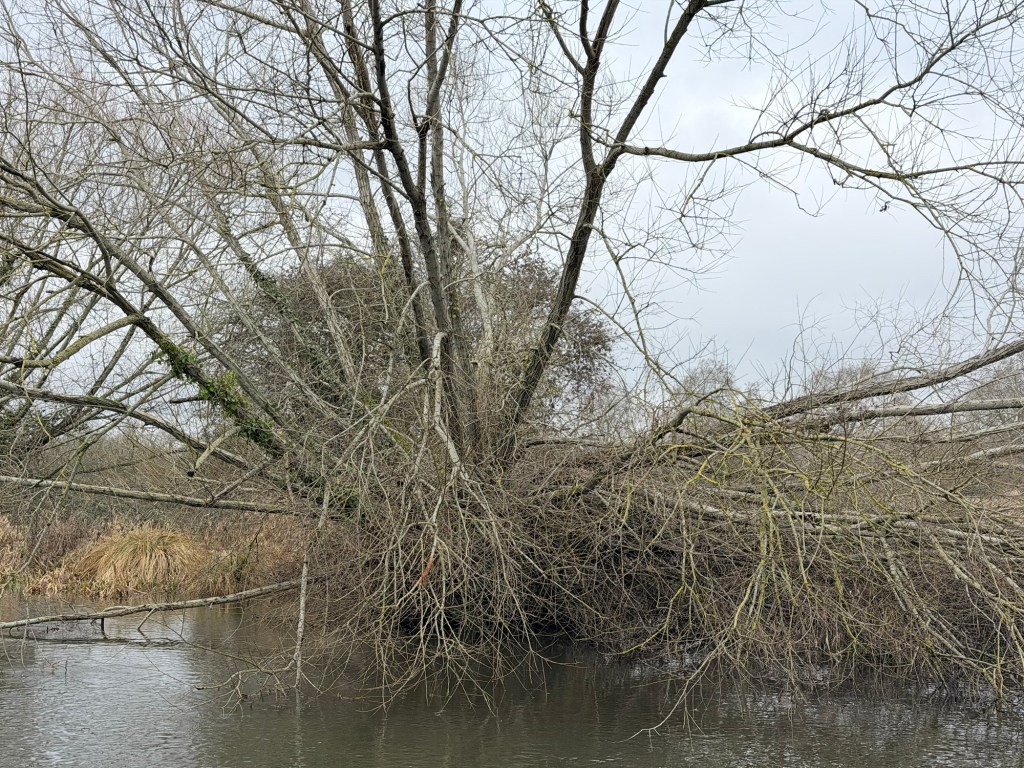
As the tree grows old if the branches aren’t cut very few years they become less numerous but much bigger. And heavier. Then the tree collapses like this one is doing right now. It’s a big and difficult job to deal with it especially if it blocks the canal, as this one will do soon.
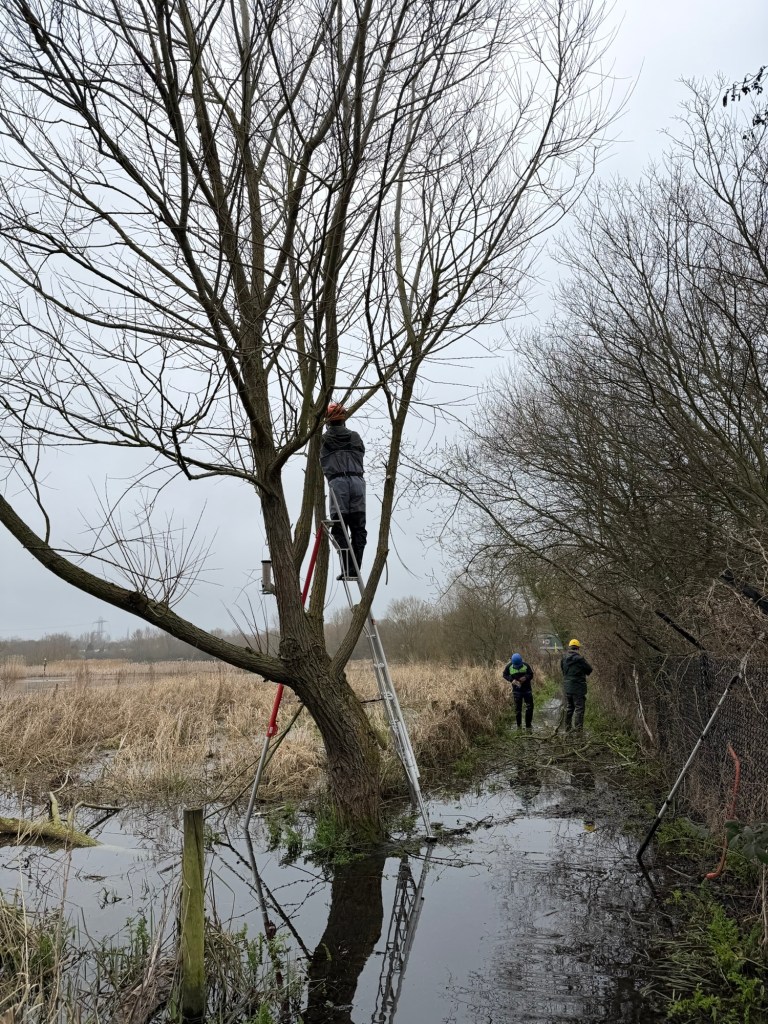
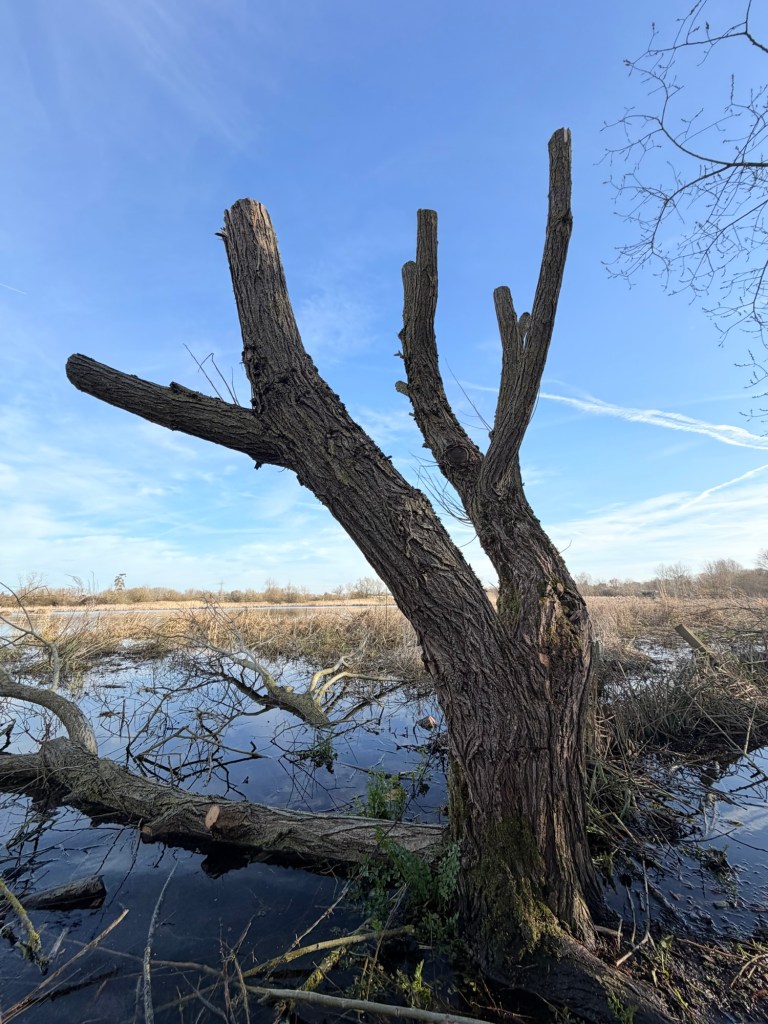
So we clambered up a ladder and chopped off all the branches. The water had dropped just enough to allow us to get there. We tried a couple of weeks back and late last winter, but each time the water levels were too high.
We also cut everything into piles, some for planting as twigs and some to plant as big bits of wood that might become mini dams to slow the flow of water off the marsh.
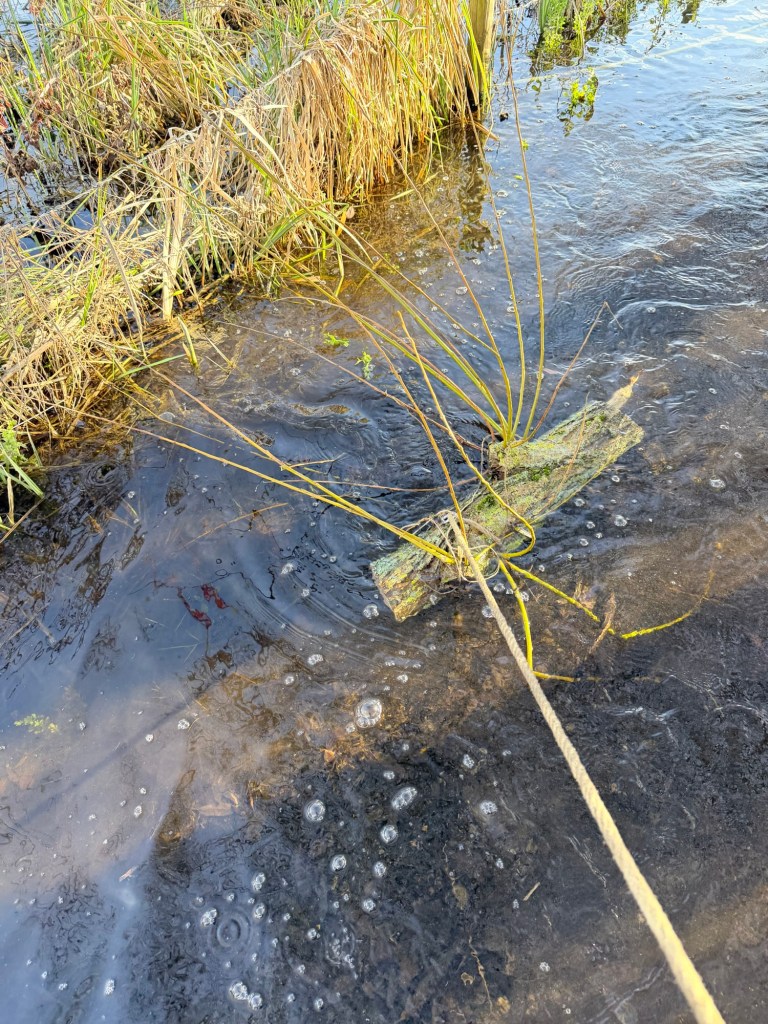
This branch will soon sprout and root in its new spot a hundred yards away.
Another value is that the old trunk will become hollow, and could become home to bats and many other hole nesting and roosting birds. The way we’re going to manage the tree in future will encourage holes to form. We’ll leave some stubs sticking out so as the tree ages they will disappear and leave holes behind.
Pollarding willows is an iconic technique. I grew up among the pollarded beeches and hornbeams of Epping forest. These ancient hulks are monuments and I knew where I was in the forest by recognising individual trees.
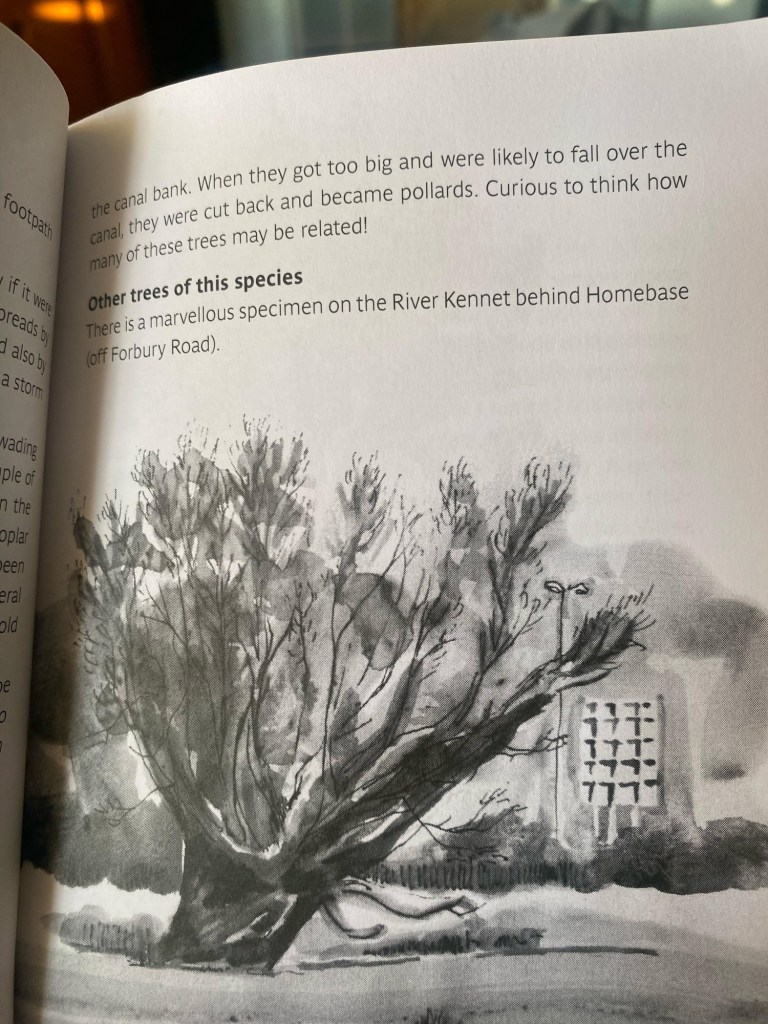
Willow pollards are iconic in managed wet landscapes.
The willow we’ve just pollarded will become a landmark, surviving long after we’ve gone. We have no idea what the future holds and one day Marshians may not be around. But our willow will.
 Rural Reading