
Reading is, famously, Not A City. It has a claim on being the largest town in Western Europe, depending on quite how you define its boundaries (hello, Woodley separatists!). We have applied for – and been turned down for – city status four times, and now we sit here side-eyeing Portsmouth, and Chelmsford, and Milton Keynes, and saying “You don’t need it, Reading, you are just fine how you are.” A town.

A town which has motorways and railways in every direction, making it trivially “easy to get out of”. This is often touted, only half-ironically, as its best quality. And for years I would escape the city – ahem, town – as often as I could, feeling no sense of belonging at all. Perhaps I was even a bit ashamed of it, with its apparent dearth of culture, and veneration of shopping (the large and convenient Oracle mall being the only thing about the town that is signposted from the motorway). How could it compete with the bright lights of London, where I had grown up, and the cultural behemoth Oxford, where I had lived since?
But that changed once I had children. Children stretch your emotional boundaries while shrinking your geographic ones. Weekends away became a memory, but local parks and cafes and nature reserves sprang up to take their place. I found out what happens here at weekends, and where the independent shops and artists were hiding. The pandemic accelerated this: I explored Reading’s many footpaths and cut-throughs, and the canal and Coley Meadows became my backyard, my nature escape. I felt, for the first time, like a local. This was my patch.

It turns out that Reading has a depth of cultural and natural history that most people, even those that live here, are unaware of. It has several beautiful waterways (and a book press named after them). It has a 12th Century abbey, where lies the body of a medieval king, and the earliest written example of six-part choral music.
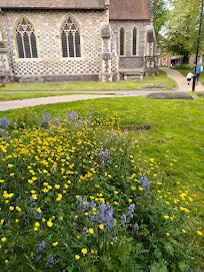
It has a delightful museum with a copy of the Bayeux Tapestry in it (whose own history is just as fascinating as the original’s).

It has its own hydropower plant, founded and funded and run by the community itself. And this last one brings a lump to my throat, because it means there are many people around here who care enough to want to do something committed, concrete and intentional about the climate crisis.
It turns out it has lots of people who care deeply about the environment, about nature, and about this town. And some of them have started to call themselves Marshians.

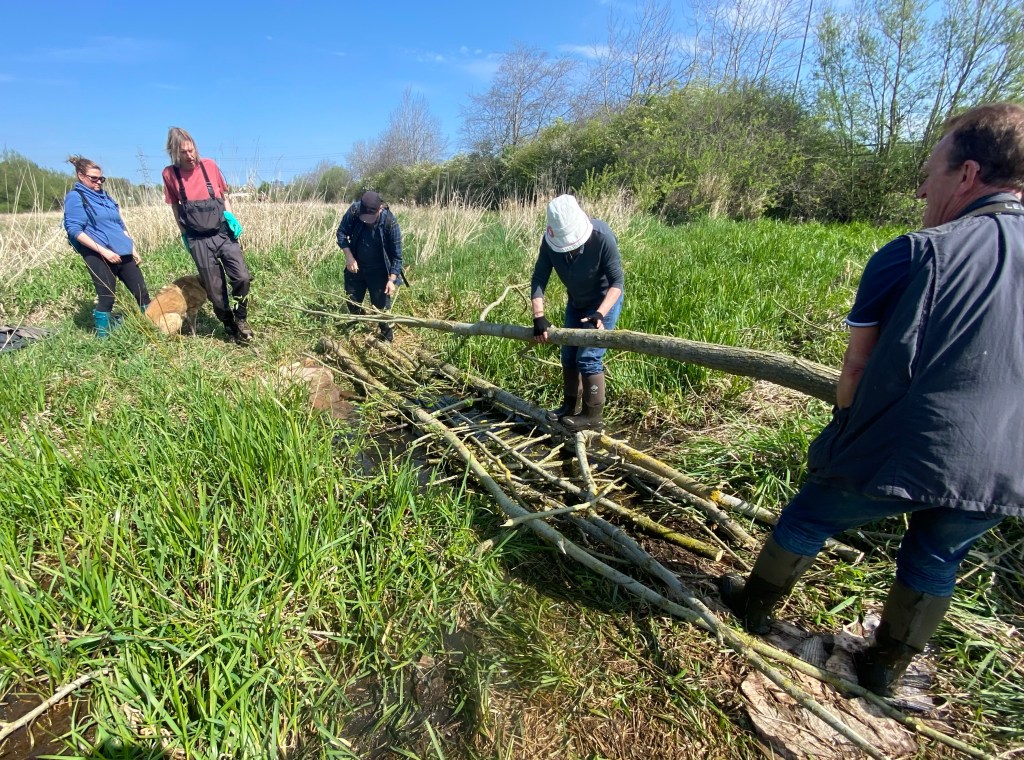
In April, we met up as a group over Easter weekend, to continue our mission to improve and nurture the urban wilderness of Fobney Marsh. As we did in March, we planted willow trees and stomped our new path. This time, we – and the temptation to indulge in more poetic metaphors here is strong – built a bridge. A bridge to allow our path to continue its way north through the meadow towards the town.

And this time, perhaps because it was the Easter holidays, or perhaps because the weather was warmer and the ground drier, many of us brought our children along to join in. The marsh became a place of imagination and make-believe and games: bridge-builders traded handfuls of grass for pocketfuls of water mint from would-be entrepreneurs, while others disappeared into the reed meadow to make friends (and nests, I was told).

I find it endlessly inspirational to watch the way young children explore and make friends, with an innocent confidence that this is obviously what the world is for. As adults we can feel trapped in a small social bubble, formed when making friends was easier somehow. We lock our doors and put blinds in our windows and erect tall fences round our gardens, because we need to feel safe, and in control, and most of us have had periods of our lives where we have felt neither. My house certainly represents that safe haven for me, but I also feel the isolation and burden of being a solo adult with kids: we’re not equipped, psychologically or practically, to deal with it all alone. As the adage goes, it takes a village to raise a child. For me, this means a community of people of different ages, of different backgrounds, with different skills and personalities and strengths, but who share something important: a location. Home.

We are Marshians. We are people of Reading town. We are friends, we are colleagues, we are family, we are community. We are the village.
A guest post by Raven Wilderness.
 Rural Reading