
The lack of rain is affecting us all, the dry sunny and breezy weather is desiccating the land.
There is still water in the marsh, but huge areas have dried out. In a little over a month the flood water has receded, where it was over my wellies it is now dry.
This is what you would expect to find in late summer. In early April it’s unheard of. It’s pretty discomforting, thinking about all the effort we’ve put in over the winter draining and evaporating away.

It has enabled me to explore remote parts of the floodplain. Last year the vegetation had grown up by the time the soils were dry enough to walk over. I simply couldn’t force a way through many parts of the marsh. This year and for a brief moment I can.
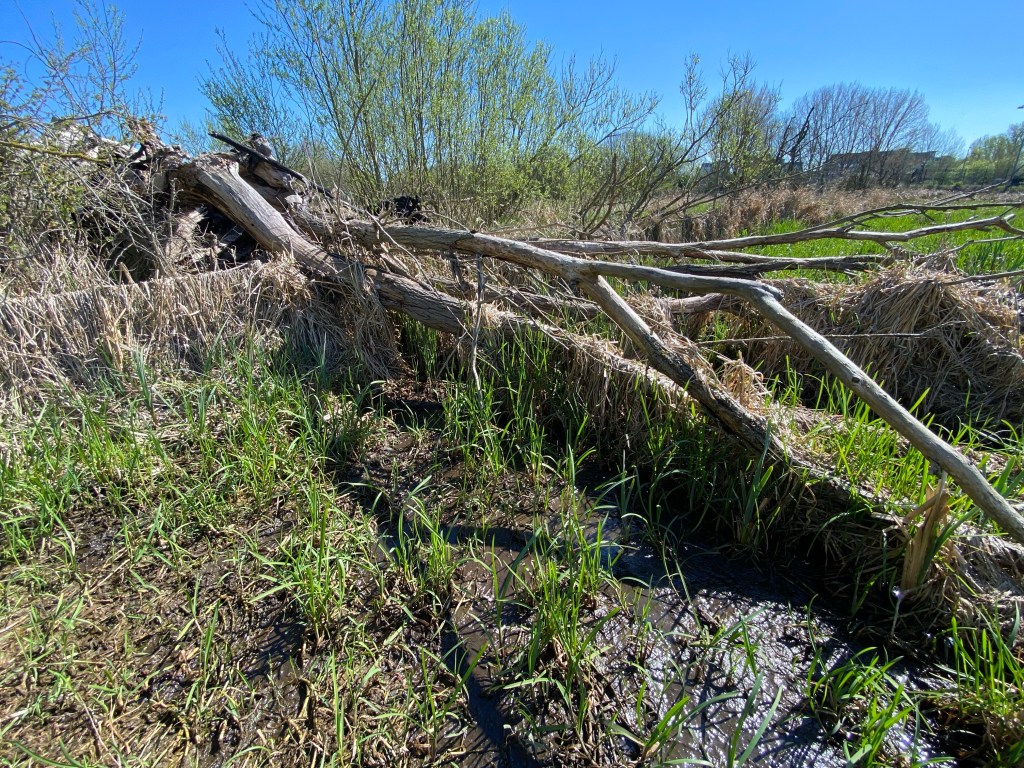
I was able to reach an ancient willow that mysteriously burnt a few years ago. One branch has survived and is sprouting new shoots. In its prime it was the biggest willow trunk I have ever seen.

I followed the ditch it lives alongside, there are a line of trees that have all probably grown from twigs of that tree. They themselves are big old trees but are destined to collapse one day.
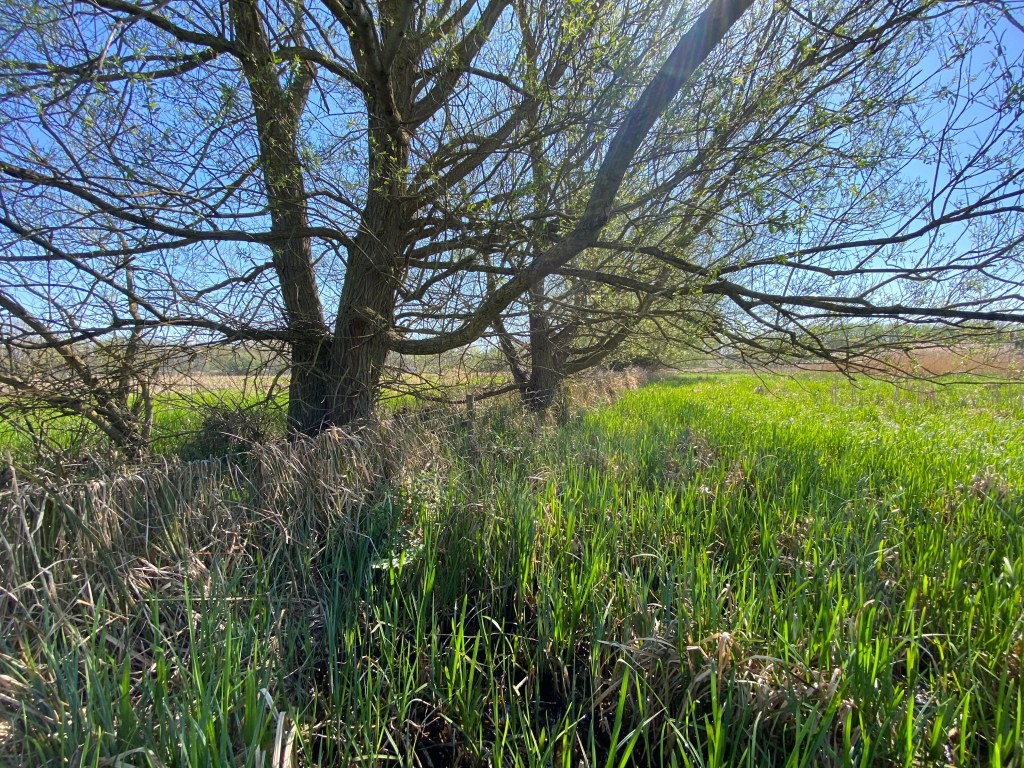
At the far end of the line of trees is a reedbed.
Last years stems are 3 metres tall. Once you’re among them you vanish, and the rest of the marsh does too.

I heard the first Reed warblers of the year among the stems. I won’t go back there again now until they leave.

I followed the bank of the ancient water course that meanders across the marsh. It will very soon be impenetrable so I doubt I’ll go back for a while either. It was hard enough to get through, but a few more days of warm weather and these little shoots will be much bigger and much tougher.

Now there is no grazing the willows are reaching out and will touch the ground and root. For many years the cattle have eaten the leaves and young twigs, almost pruning them into nice neat trees. Now the trees have escaped the constant nibbling and will soon put down roots. This will soon become a wild wet woodland.
If it doesn’t dry out.
 Rural Reading