

Midwinter is perhaps not the best time to appreciate brambles.
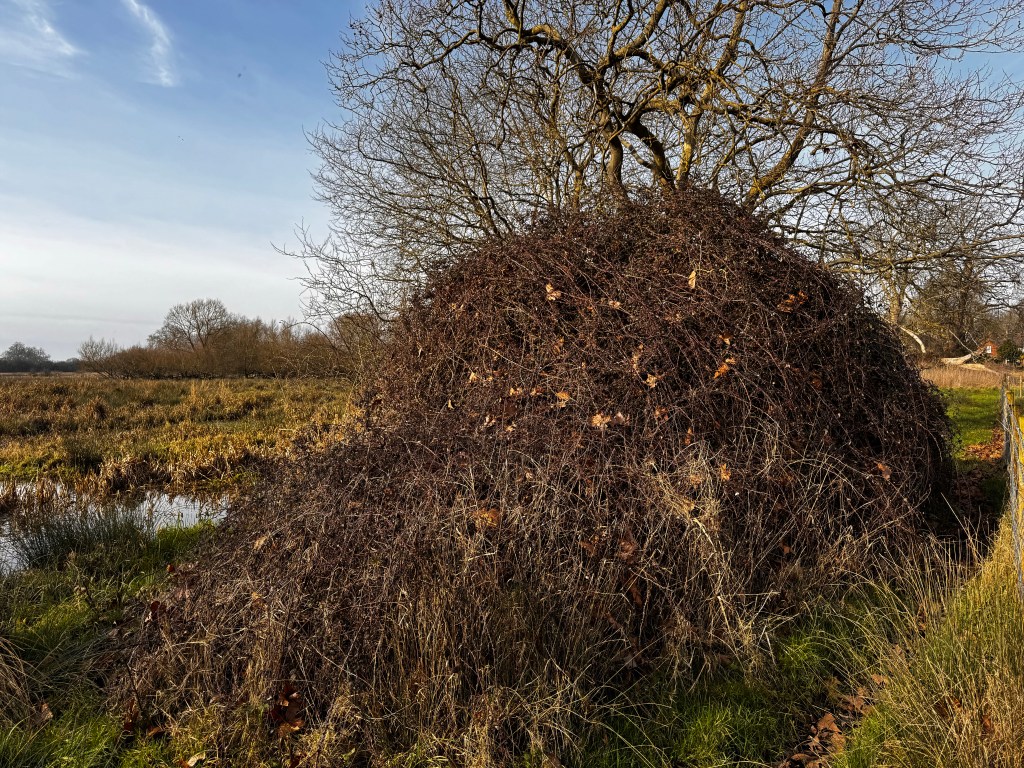
In winter it’s the spiky stems snagging my feet and tripping me up. That’s how, with stinging nettles they keep some areas of sanctuary in our crowded landscape.

Brambles might be one of our saviour plants Some people deride them, even conservationists hack them down. Nobody ever plants them. Yet they are ubiquitous. It’s not just the sanctuary they create.
Brambles are hard to kill. Soon a seedling will be a thicket. The stems will root where they touch the ground. A fragment of root left behind after the thicket has been cleared will soon grow back.
Nightingales like to nest deep in the brambles and fill the air with their song. They aren’t alone. Many birds do the same, except they don’t all sing quite as well.
Jays like to bury acorns by brambles. They can find their buried treasure even in the snow using the bramble thicket as a landmark. Those acorns they forget become seedlings sheltered by thorns.
So in a while a bramble clump might be shaded out by an oak.

But then the oak grows old and lets enough light in for blackberry seeds dropped by birds roosting in the canopy to germinate.
The brambles help protect the tree, keeping the soil cool and untrampled. Trapping leaves in winter to nourish the tree in spring. Creating a home for voles and shrews and hedgehogs.

And when the tree dies the bramble helps to bury it, soon enveloping it and giving it a dignified end. More life around the dead tree than there was while it was alive?
In summer brambles provide nectar for countless bees and flies, butterflies and wasps. There’s a good chance some bramble flowers have contributed to your honey. There doesn’t appear to be any limit to insects feeding on bramble flowers. And those insects attract predators.

That’s a Brown Hawker dragonfly by the way. Aeshna Grandis.
There’s not much that won’t eat the fruit either. Almost every dropping of mammal and bird is purple from blackberry juice in summer.
I like to pick blackberries in August and freeze them. If I get it right I have blackberries on my porridge all year round. I never do though. I’ve run out by February most years. That’s what prompted me. I’ve just searched the freezer in vain for some squirrelled away.
I’ll have to wait a few weeks before the delicious flavours of fresh ripe berries add to any summertime walks. And breakfast.

Some moths lay their eggs on bramble and the larvae mine into the leaf until they pupate. One of these is the amazingly named stigmella splendidissimella. Aka the Glossy Bramble Pigmy moth.
There’s a lot more to the humble Bramble than meets the eye.
 Rural Reading