
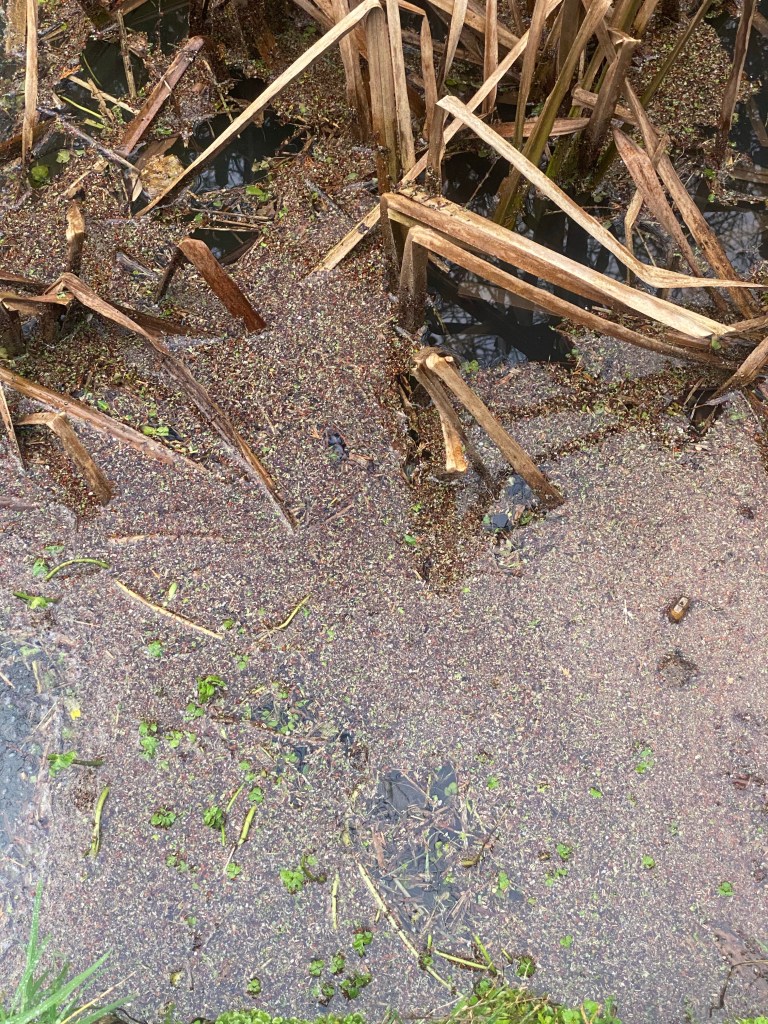
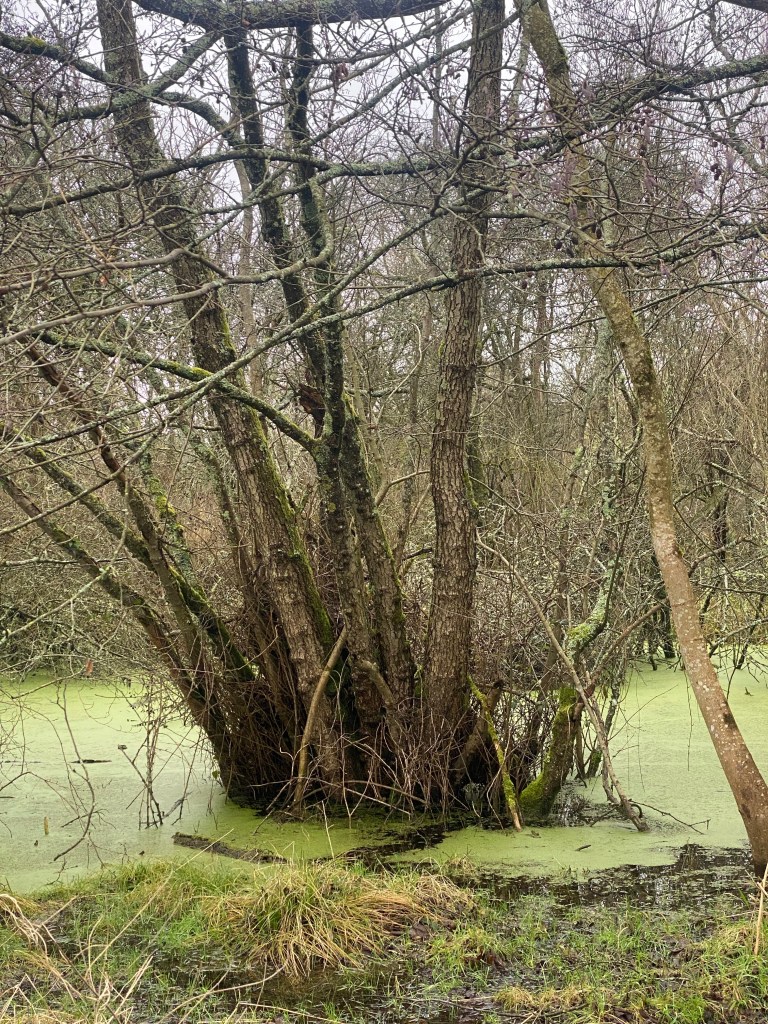
Alder seeds. Thousands of them. The surface of this ditch is covered with them as is every bit of still water across much of the river valley.
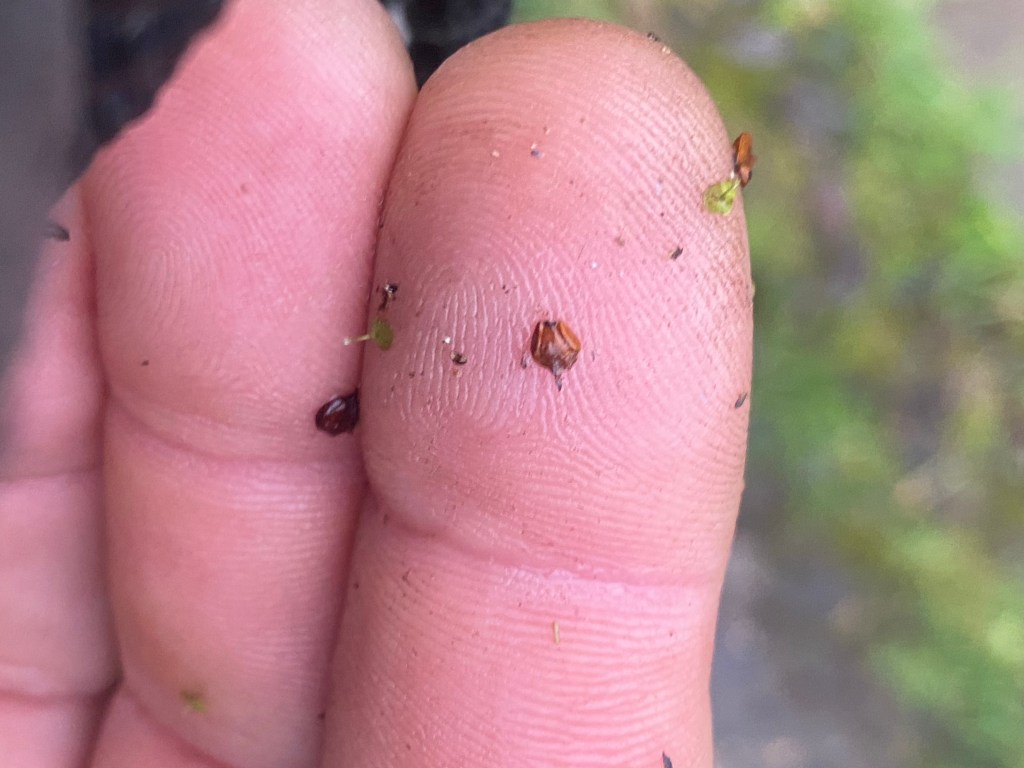
See how small they are?
They’ve blown from the cones of older Alder trees that are common along the river banks.
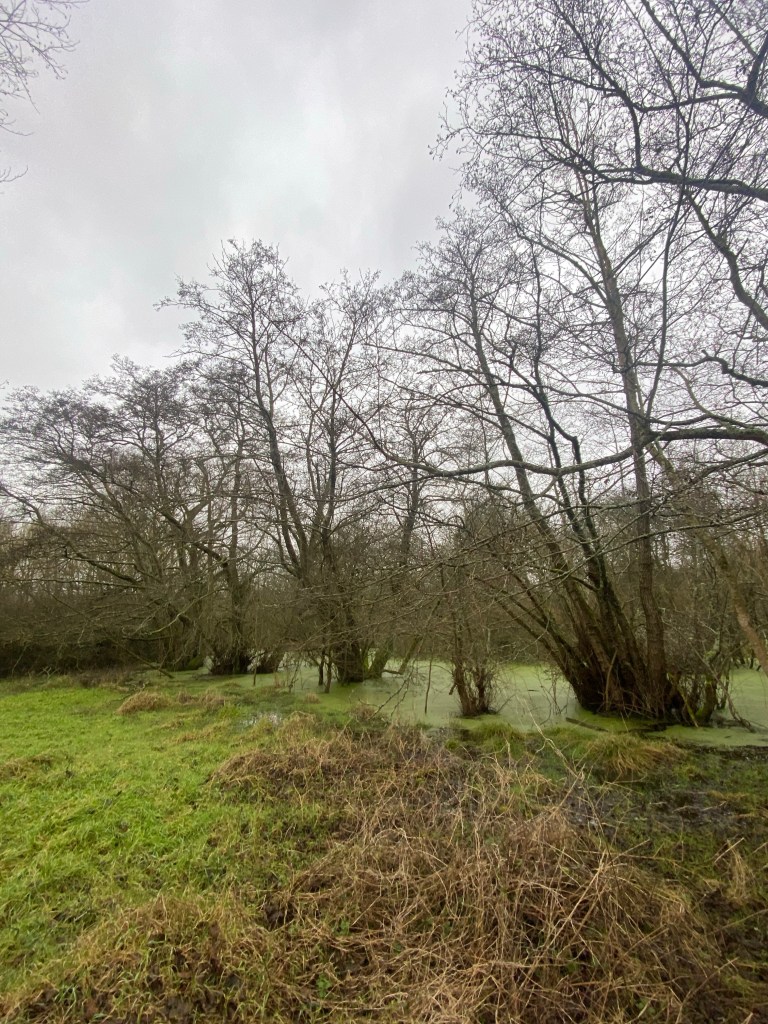
In midwinter the trees shed millions of seeds. Many birds, Siskins especially, eat them. The rest get washed away in the winter floods hoping to find a spot to grow.
This bit of river bank has always interested me. I once bought a map which showed my house being built in 1934. Elsewhere on the map was this river course. Not long after the map was drawn the river was diverted
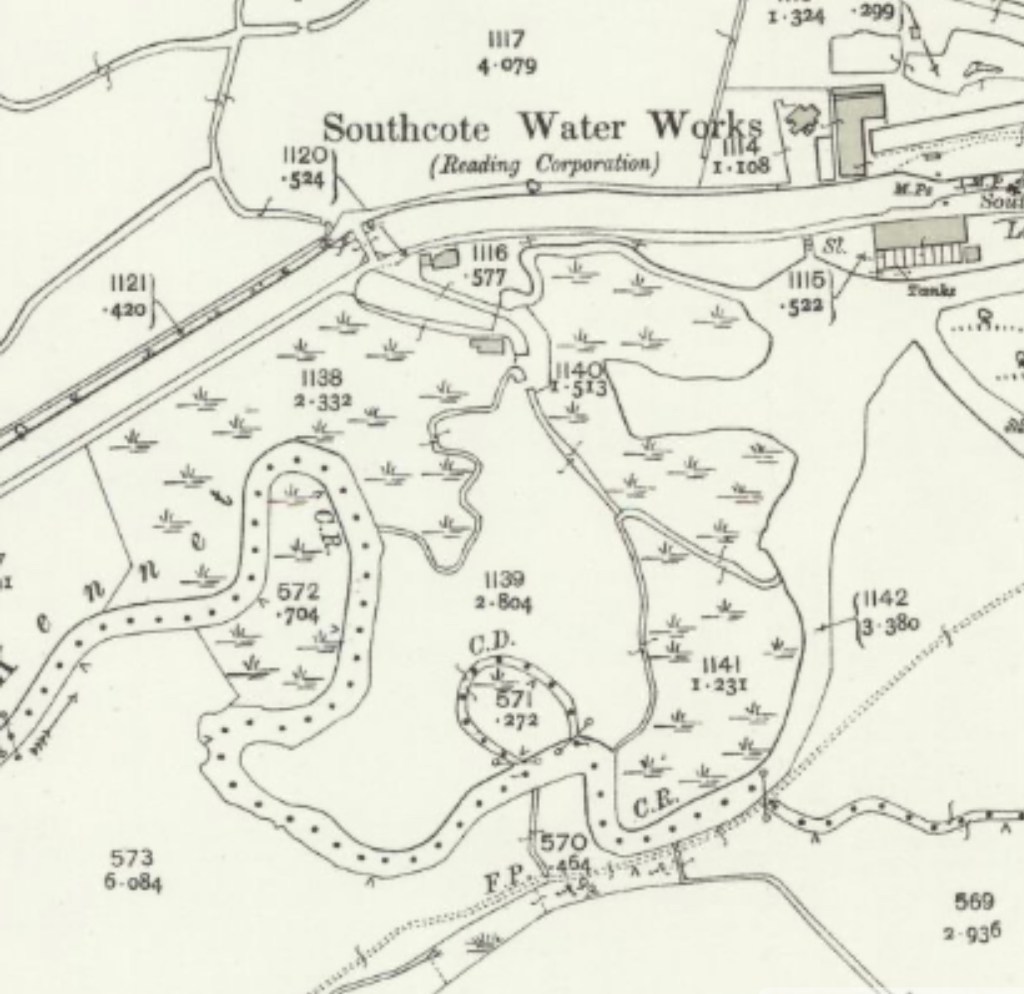
It was clearly a problem as there’s evidence of structures being built to stop it bursting its banks. So it was straightened.
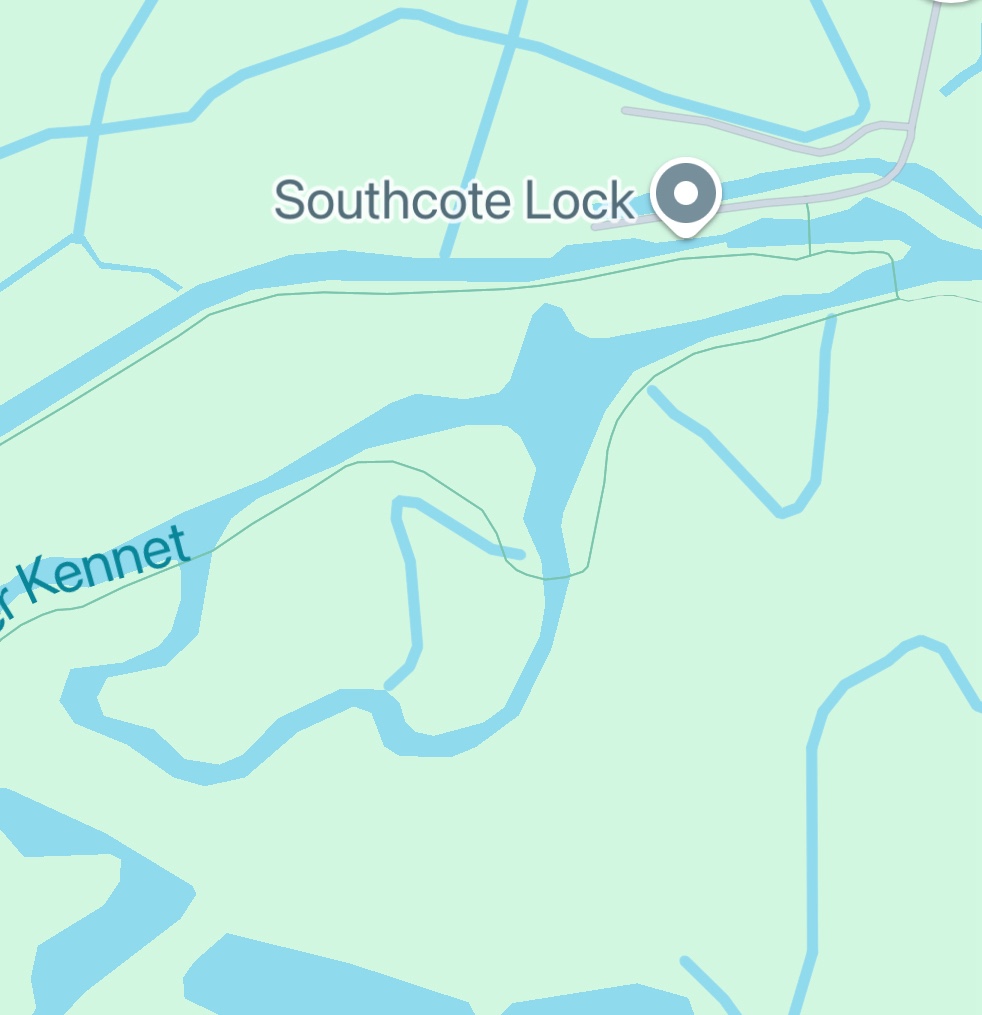
The result was a loop of the river being cut off. No flow of water, no access, and Alder trees taking over. Some of those trees are a century old or more. They’ve mostly been coppiced, those older trees. They were growing on the bank when the river flowed. I suspect they got cut back to keep the river open.
All the area around the river was dug for gravel. What now looks like a field was a gravel pit when I first set eyes on it. But when they’d finished digging the gravel, and replacing it with “inert waste”, they covered it with clay, then topsoil and finally some Wildflower seeds. For a few years it looked like a nice meadow
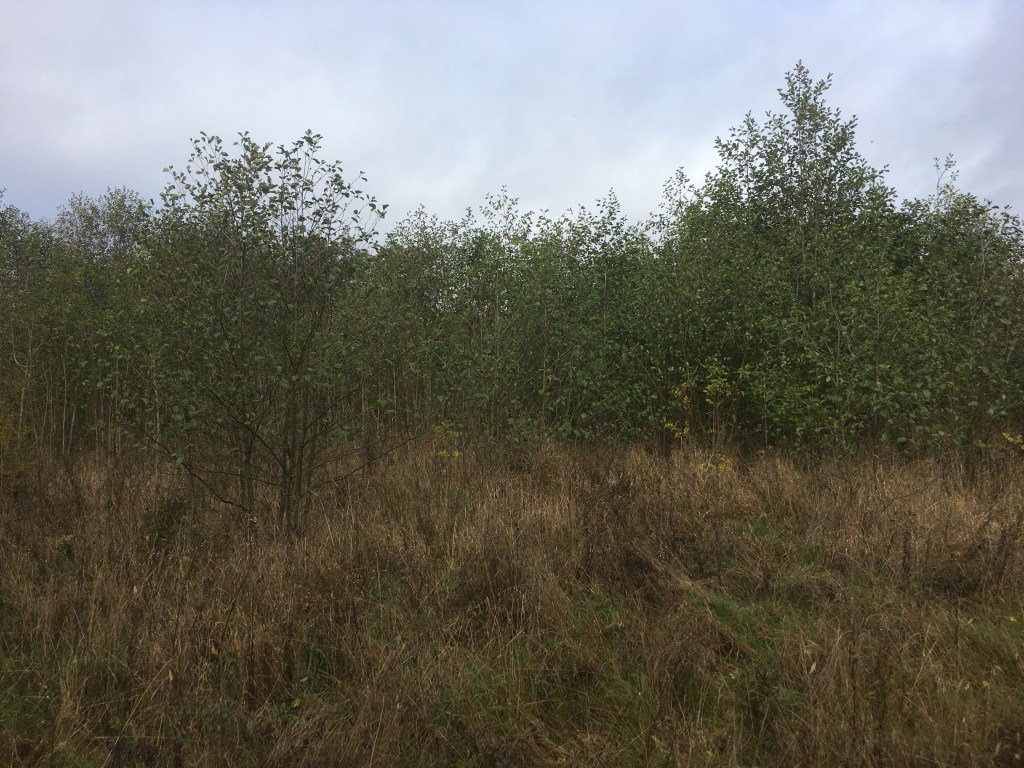
But then Alder seeds started sprouting. They really need to be somewhere wet all year round. So their presence meant that the meadow was always wet, and I suspect that the clay cap had sunk in the middle and formed a giant puddle. They grew well and after the farmer had tried cutting them down a few times the trees eventually won.
And then, in the 2022 heatwave the woods, which had been drying out for weeks dried out completely and caught fire.
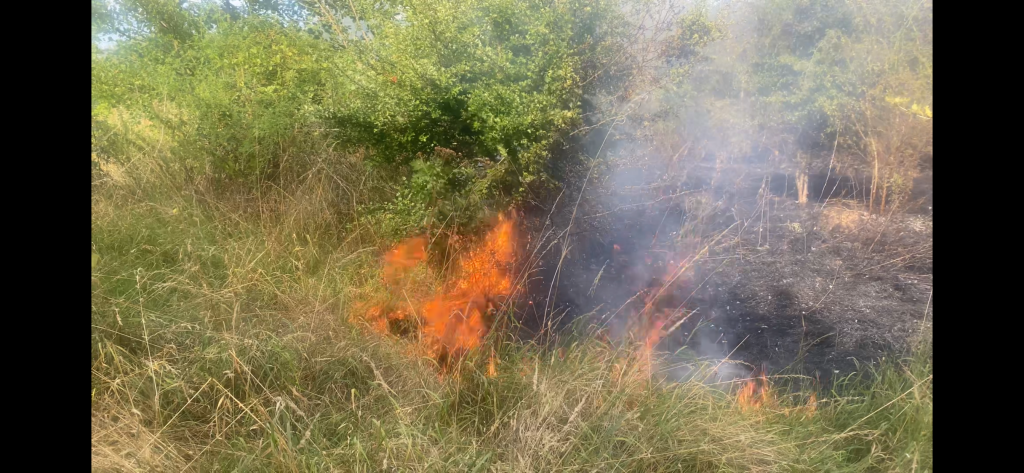
And within minutes a supposed wet woodland was gone.
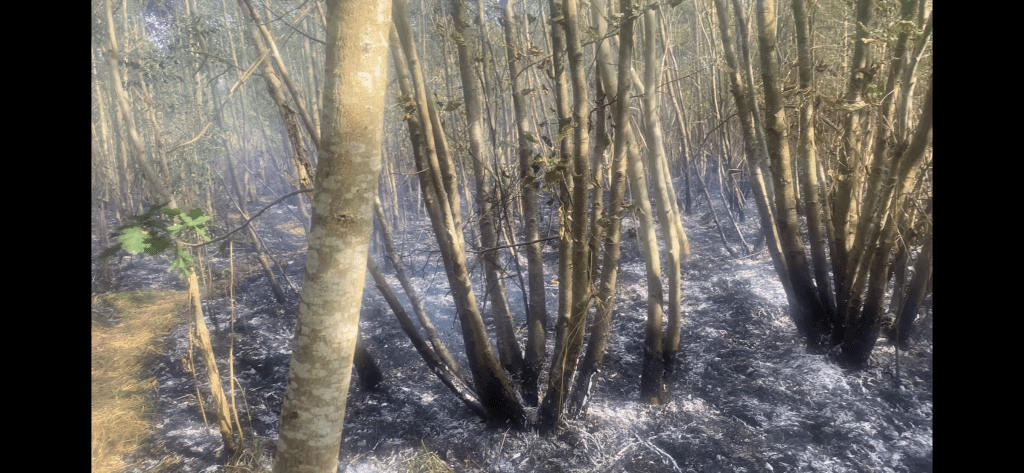
Some of the trees hung on for a while, most of them coming back into leaf the following spring.
They didn’t really recover. They just slowly died. This winter the storms have blown many of the dead stems over.
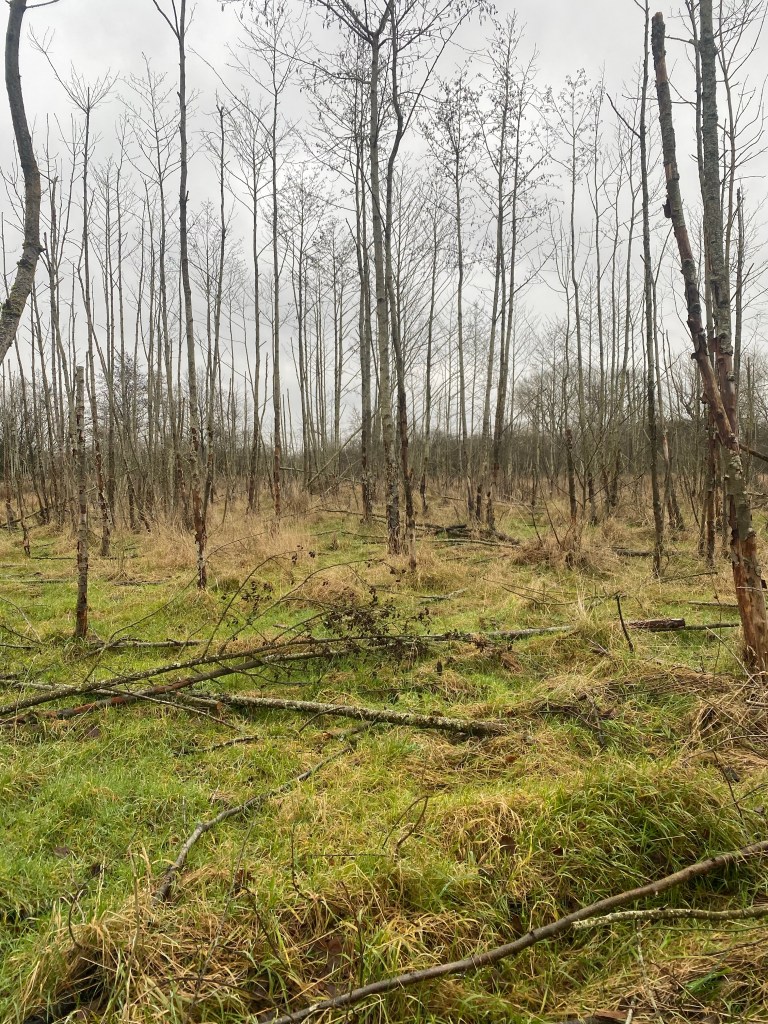
There’s not much regeneration going on, a few ash trees and the grasses. But it’s an interesting habitat and I’ve really enjoyed watching it change so much over the few years I’ve known it, even if just to see the effects of our impacts on the land, and of climate change.
 Rural Reading