
During 22nd and 23rd November 2024 Storm Bert brought catastrophic flooding and damage to huge areas of the UK. Within hours the water levels in the Kennet Thames and Holy brook started rising. The Kennet meadows just upstream of Reading started to flood and by Monday the footpaths were impassable even in wellies. Towards the end of the week the levels started dropping and I was able to walk over a large area without getting my feet wet. The water reached the very top of my wellies in many places. It was quite a little adventure. I made a lot of observations about how the water was flowing. I took a lot of photos too. 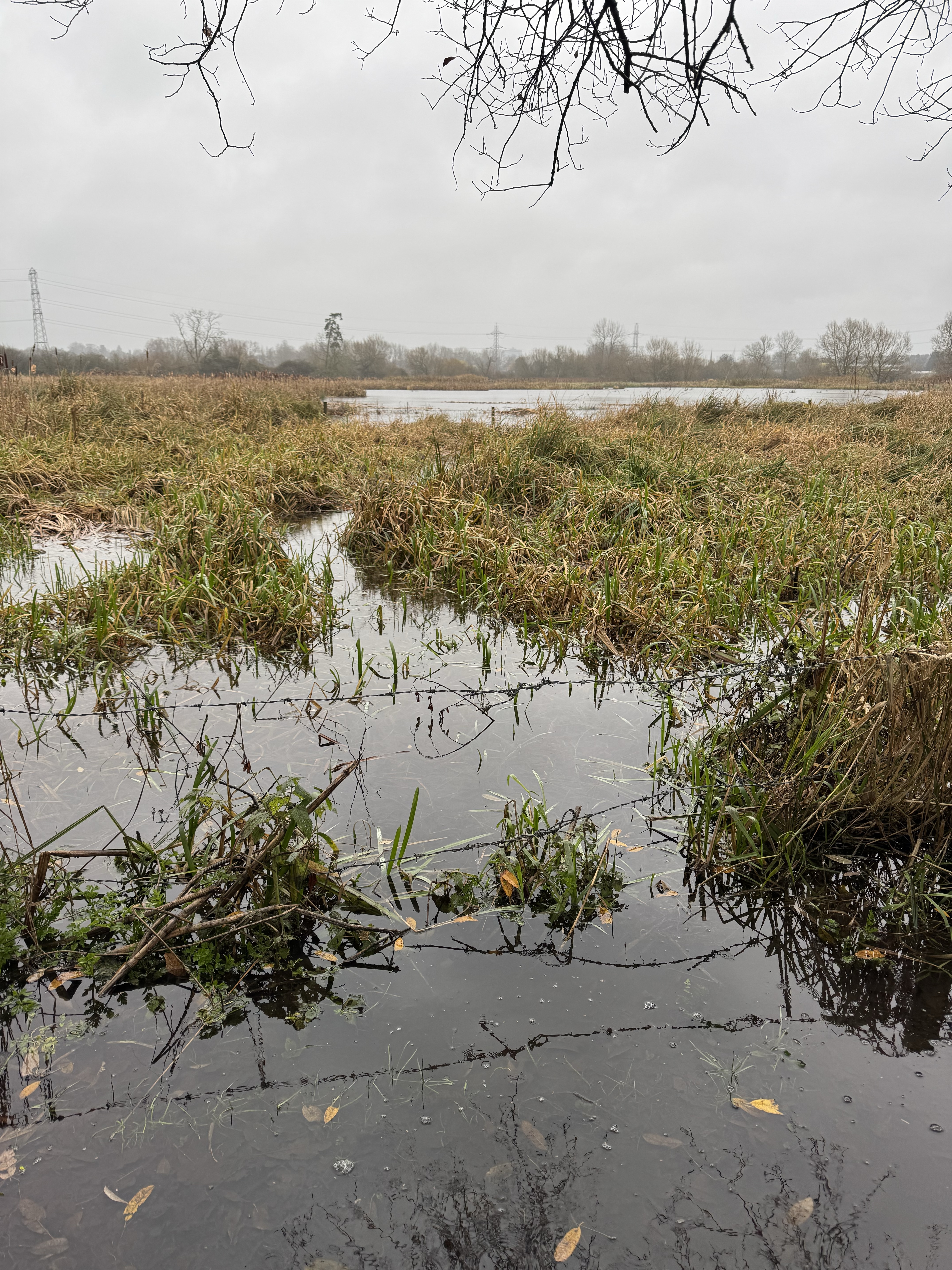
The marshes we cleared a few weeks ago were teeming with birds. The path was underwater for about half its length. The new bench was usable though. There was a nearby dry spot where Luna could sit and wait in comfort. 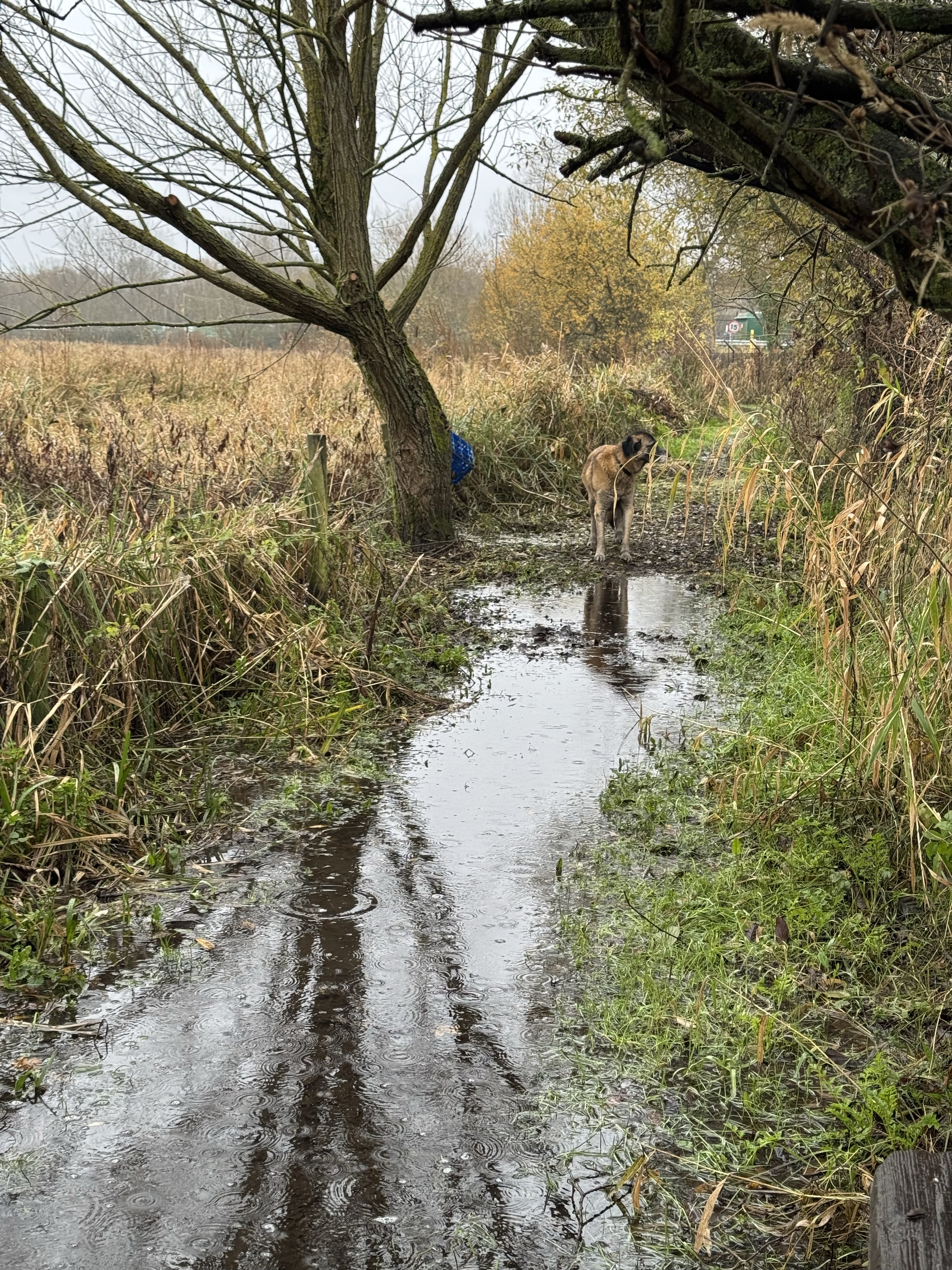
I walked along the A33 to have a look at the view from the road.
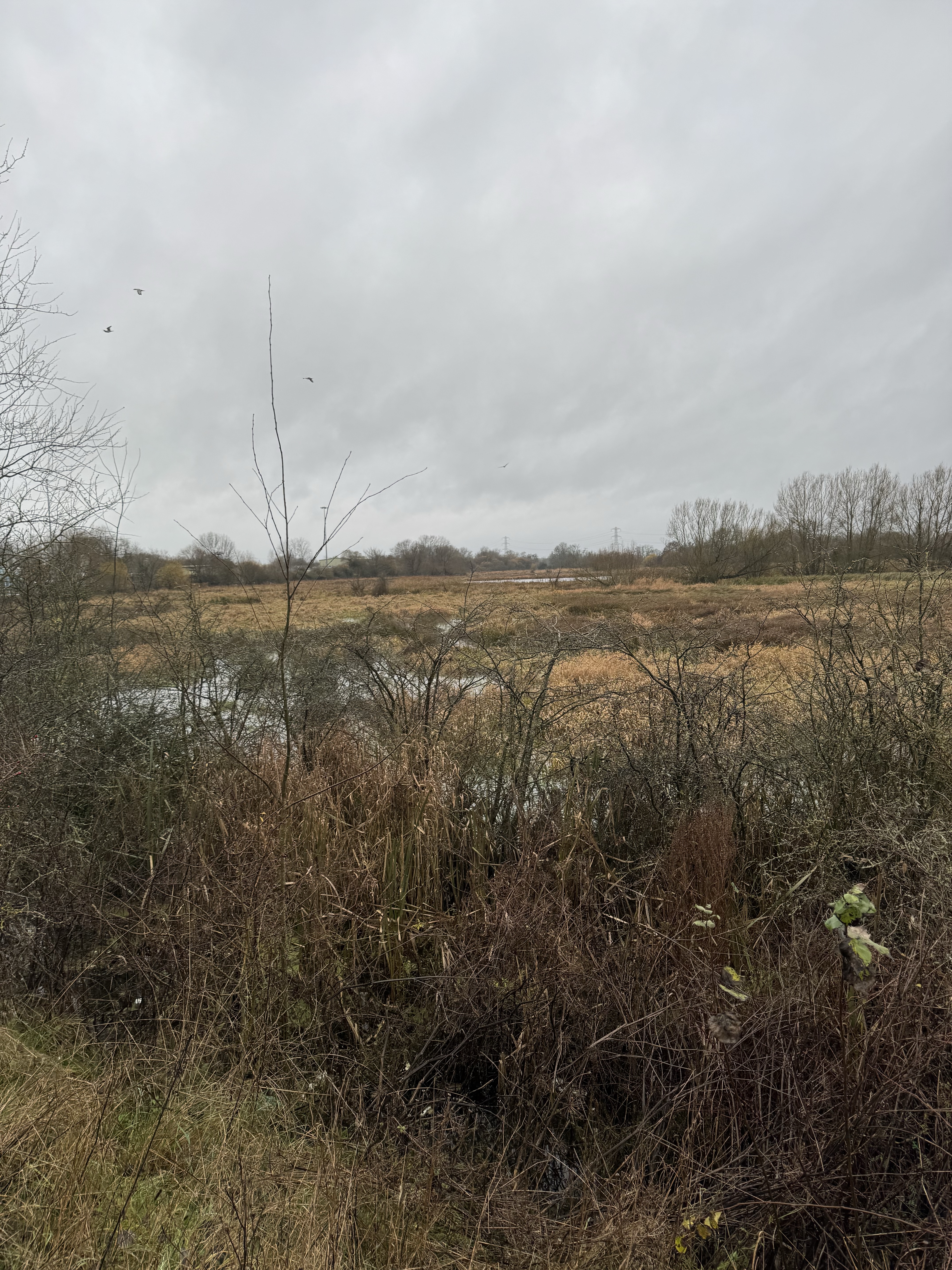
The lack of grazing is apparent, there’s a metre of water in the fields here.
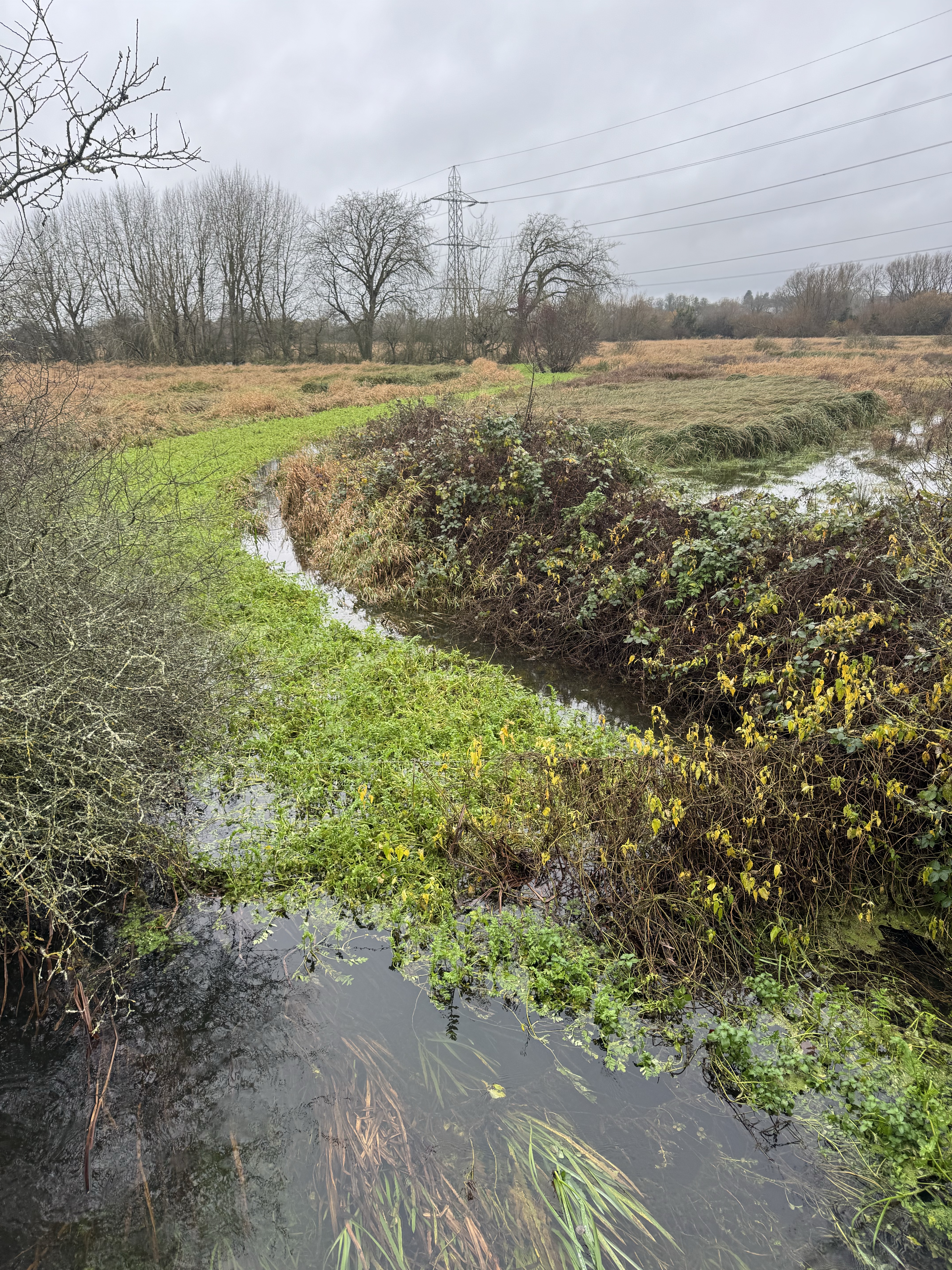
Further along the road the channel that flows through the marshes is visible as a bright green strip. Here the vegetation is helping to slow the flow of water.
The government’s flood risk map shows this area well.
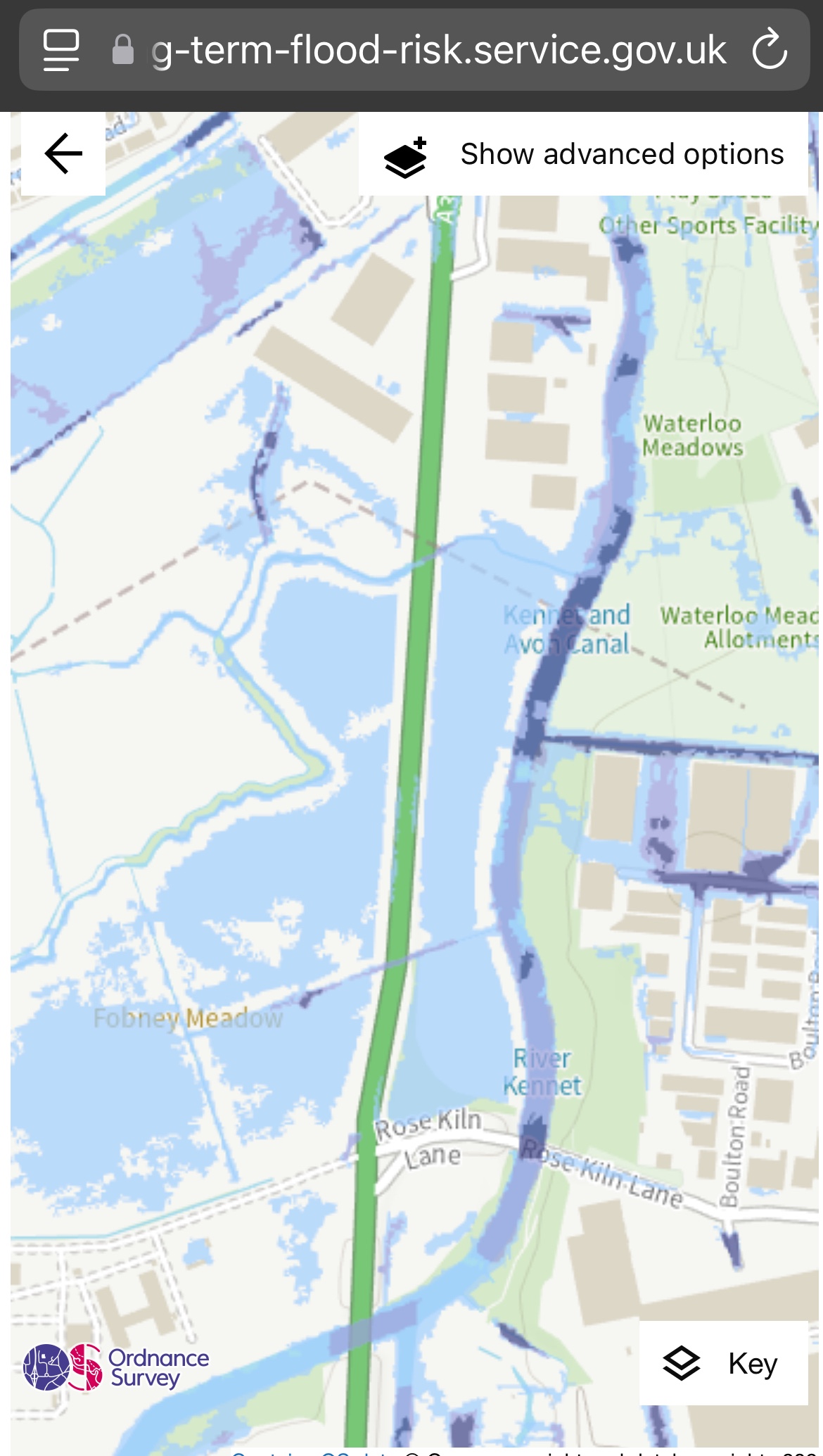
However the map shows the meadows to the west as not at risk from flooding.
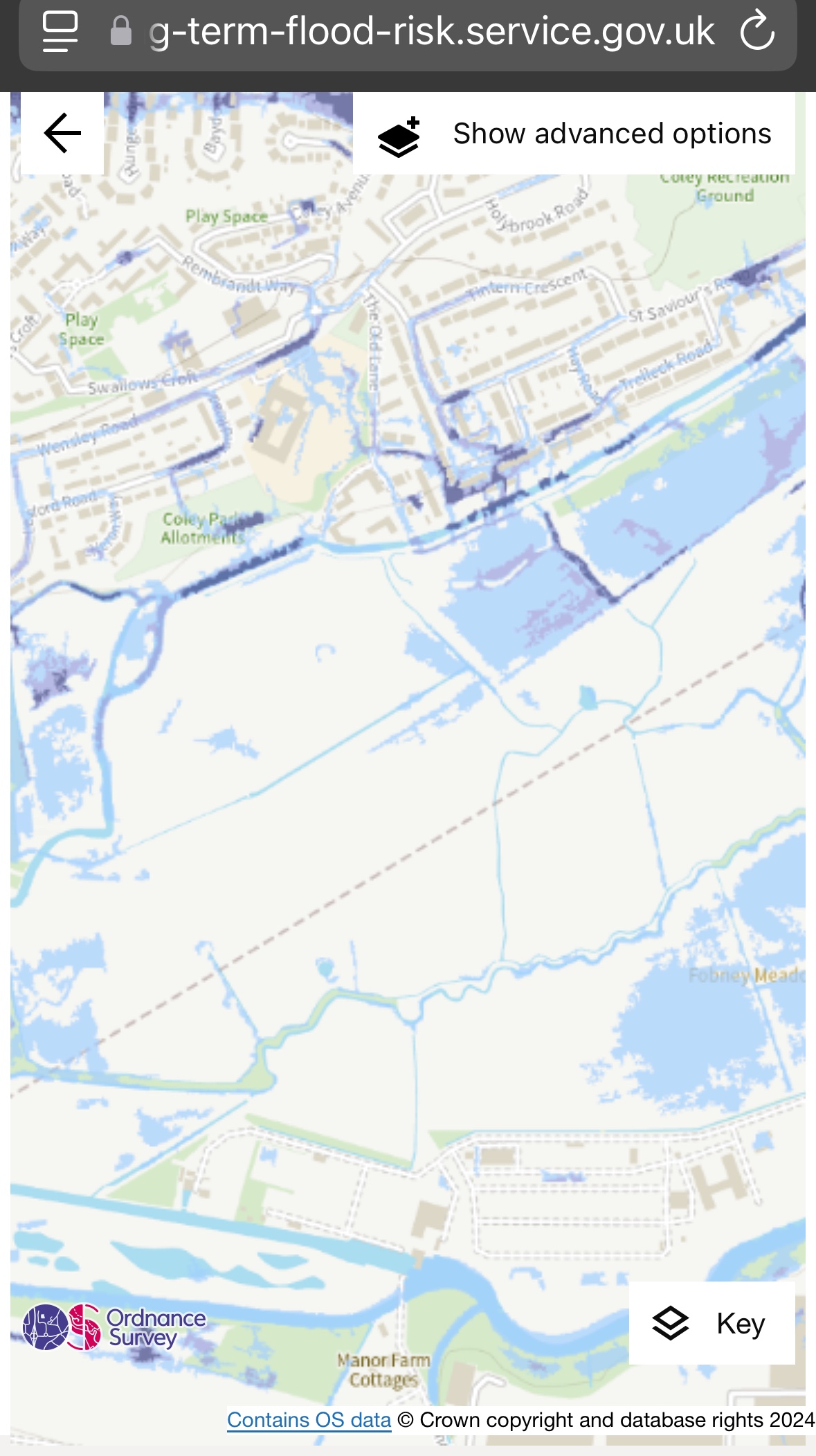
A few hours spent paddling around the marshes corroborated the map.

It’s sopping wet but it’s flowing fast and shallow.
So what if there were some measures put in place to hold back some of that water?
It’s still much lower than the canal and the Holy Brook so water could be released and held so it slowly rejoins the river lower down.
At present it’s flowing there as fast as it can flow. The lack of grazing is now actually helping to slow it down!
But in town, a couple of miles further down the river the flood map shows what impact it’s having on people who live there. 
Shopping is impossible in the nearest supermarket where lots of Newtown residents walk and cycle along the river.
Look at the flood map there.

While the fields upstream are draining away the floodwater is affecting people directly. It’s not even that extreme yet.
Meanwhile the marshes throng with birds, and making this a proper wetland could reverse the decline in biodiversity.
I’ve found out about lots of funding if we were able to do some ambitious work.
Beavers of course would do all this for free.
 Rural Reading