
Reading’s parks are great places to hunt for wildflowers. Many of them have wildflower meadows managed to boost park’s biodiversity. 30 years ago this was an attempt by RBC’s parks department to reverse the alarming decline in wildflower meadows nationally reckoned back then to be over 95% of those that existed in the 1930’s.
Farms used to be the places to find grass full of bees and butterflies buzzing around a myriad flowers, but for a variety of reasons farmers wiped almost all of them out. When you see the green countryside these days it is a food factory, and little more friendly to wildlife than a car factory.
In Reading we have a great meadow in the largest park, Prospect. In fact there are plenty of places in the park to enjoy nature, the reason the park was given to people in the first place. It was a place where the population could enjoy time with nature away from the sterile life spent in the heart of town. This has never been more important than now. So even now the park is changing as the parks managers look for ways to make it ever more natural.
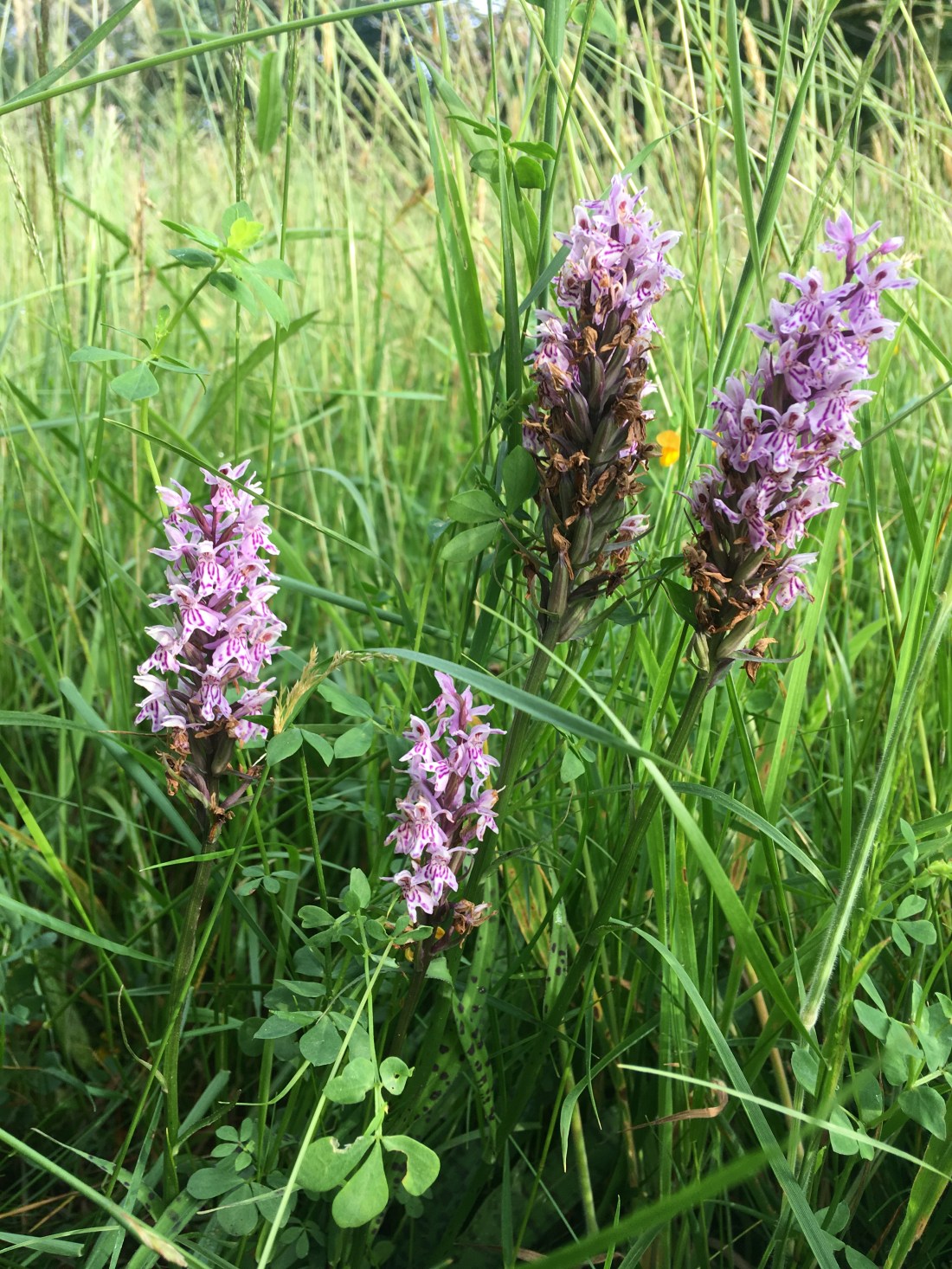
The oldest meadow was set aside from the fortnightly mowing in 1990, and it was never seeded. Wildflowers have arrived on their own. Now Common Spotted Orchids have arrived. Their tiny dust like seeds have drifted on the wind, found a suitable spot and started to grow. They have probably existed as tiny plants undetected for a few years until finally flowering. Now at least a dozen flowering spikes exist, scattering even more seed, and perhaps in the not to distant future there’ll be hundreds of them.
One plant that didn’t arrive on its own is Yellow Rattle. This is an important plant, as it feeds off the grasses, it is partially parasitic. Reducing the grass’s vigour is helpful, as it allows more delicate plants to thrive when otherwise they would be shaded out. There was a field down by the Thames where it was abundant but threatened, so I collected handfuls of seed and scattered it around the meadow in Prospect and now it flowers there happily. It benefits from trampling after the seed has scattered, as they need to be pressed into the ground. So all the cross country runners, tobogganists and dog walkers help after the grass has been cut by treading on the seed and pushing them into the earth.
I don’t know about you, but having areas of long grass, wildflowers and butterflies, and in the summer flocks of starlings looking for insects, adds a lot of interest to the park.
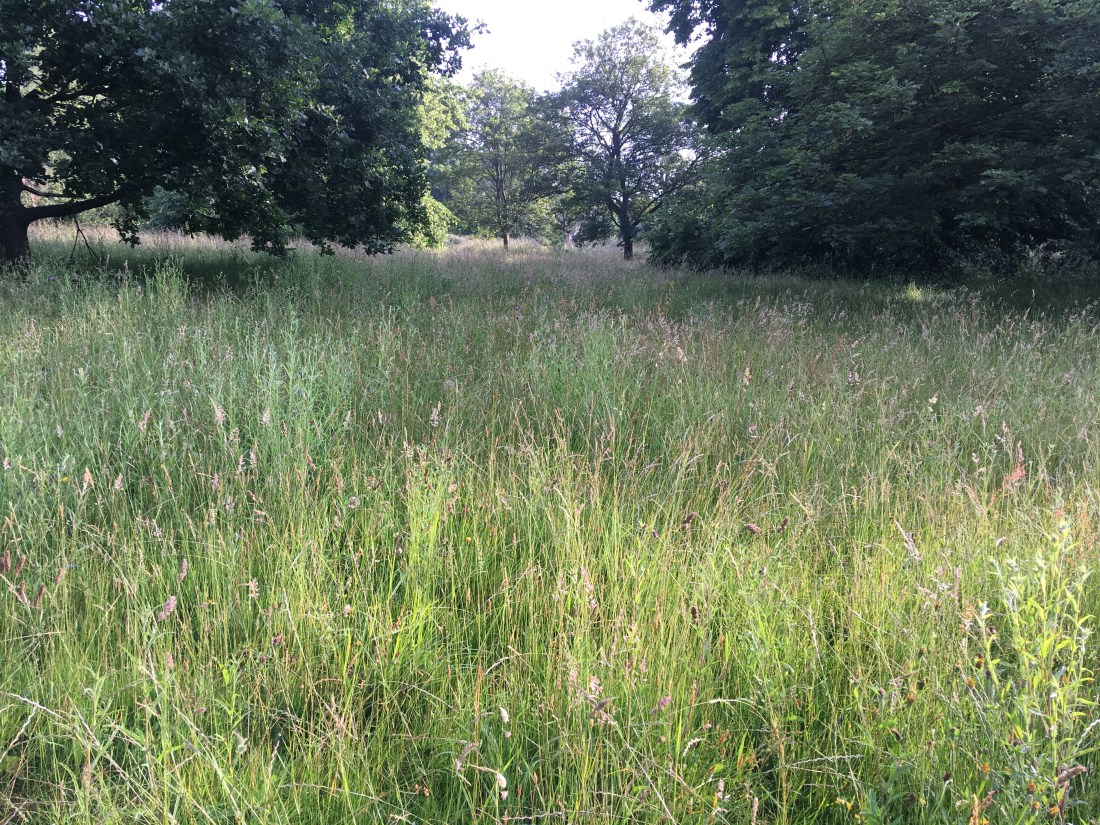
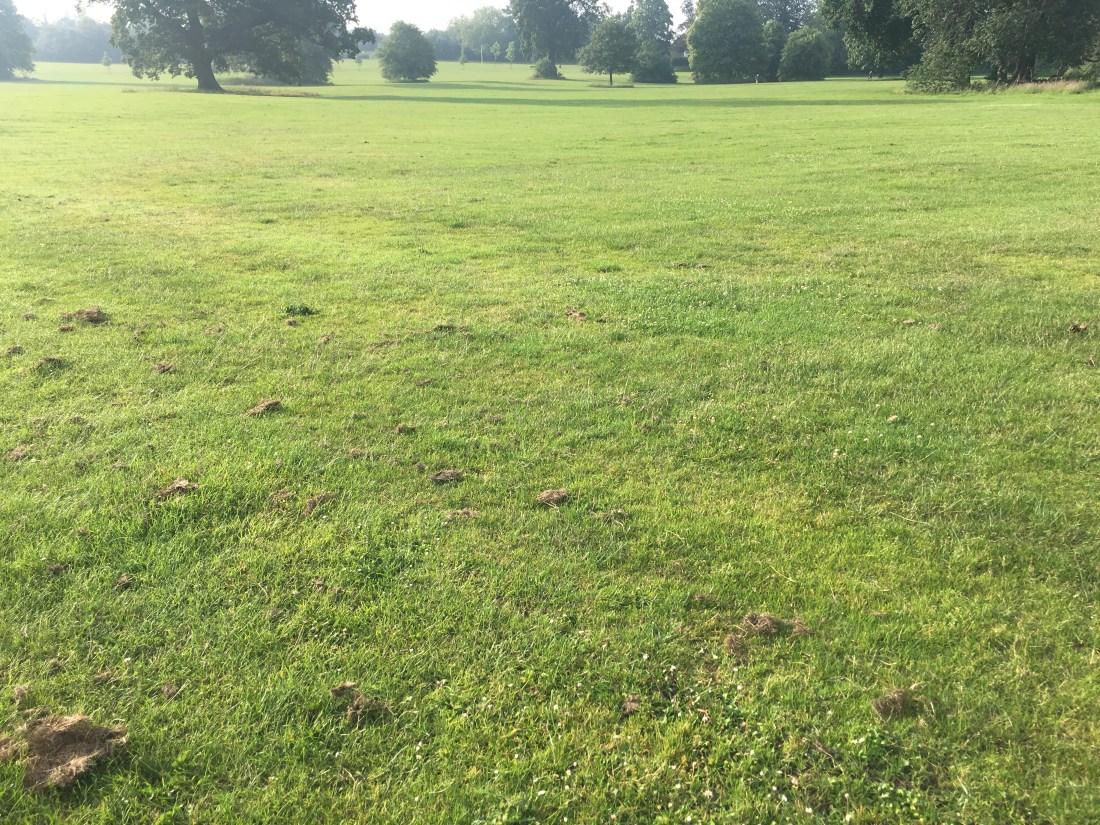
It is undeniably more interesting than the close mown grass, and I know we have to keep some of it short for picnics, sports and people to enjoy themselves, but do we need quite so much?
Eventually the grass needs to be cut, late in the year when the flowers have set seed, the butterflies have laid their eggs, and the colour has gone from all the plants, otherwise brambles take over, which is sometimes a good thing, but if the grassland wildflowers are to come back you really don’t want them!
 The really important thing, especially if there has been lush growth is to rake away all the stuff that gets cut. This is currently quite costly, but it could be the source of lots of material to make compost for the gardens and allotments if we set up large scale composting.
 Rural Reading